Space-starved bathrooms need every square inch to count. A small bathroom sink with storage isn’t just about saving room, it’s about creating functionality where none existed before. Whether you’re dealing with a powder room that barely fits a toilet or a full bath squeezed into 40 square feet, the right sink can turn wasted vertical or lateral space into useful storage for toiletries, cleaning supplies, and everyday essentials. This guide breaks down the best sink-and-storage combos, walks through selection criteria, and offers practical installation tips to help homeowners make the most of tight quarters without sacrificing style or usability.
Table of Contents
ToggleKey Takeaways
- A small bathroom sink with storage maximizes 4 to 8 cubic feet of unused space beneath traditional sinks, eliminating clutter and improving workflow in compact bathrooms.
- Three main options—pedestal sinks with cabinets, wall-mounted sinks with shelving, and compact vanities—offer different storage capacities and design benefits depending on your bathroom’s layout and needs.
- Proper installation requires anchoring to wall studs (using 3-inch screws or heavy-duty toggle bolts), confirming plumbing alignment, and maintaining at least 21 inches of clearance in front of the sink per IRC code.
- Material quality matters: plywood and water-resistant finishes outlast particleboard in humid bathrooms, while soft-close hinges and drawer glides improve functionality without breaking the budget.
- Quality compact vanities priced $400–$600 offer better longevity and resale value than budget options, especially for primary residences where durability and moisture resistance are critical.
Why Choose a Small Bathroom Sink With Built-In Storage?
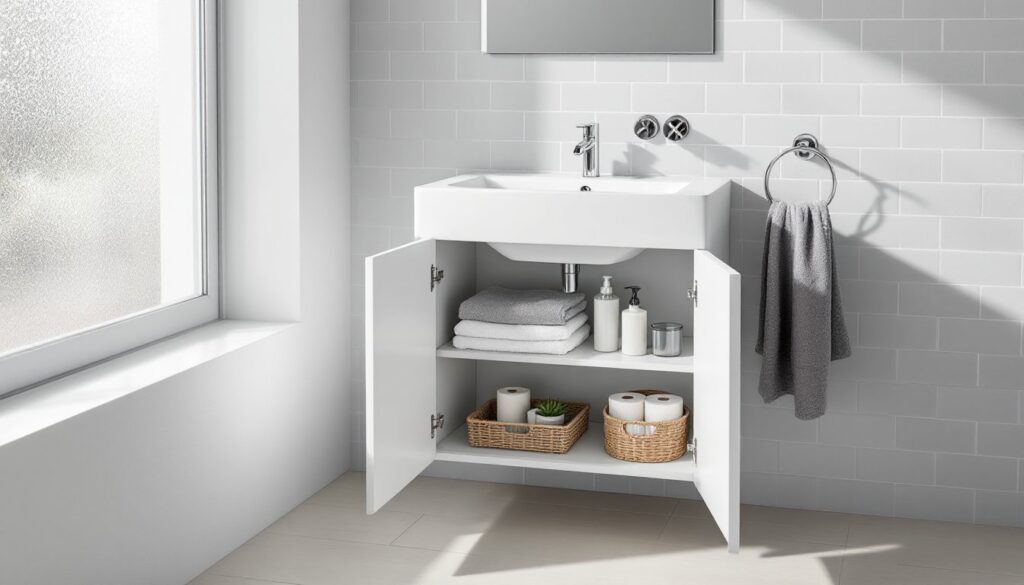
Traditional pedestal or wall-mount sinks look clean but leave the area beneath the basin completely unused. In a compact bathroom, that’s a waste of 4 to 8 cubic feet of potential storage, enough to hold a month’s worth of toilet paper, spare towels, cleaning bottles, and grooming tools.
Built-in storage under or around a small sink solves three common problems at once. First, it hides plumbing, exposed P-traps and shut-off valves aren’t exactly décor highlights. Second, it reduces clutter on countertops by giving everyday items like hand soap, lotion, and razors a home out of sight. Third, it improves workflow: storing cleaning supplies under the sink means you’re not running to a hall closet every time you need to wipe down the mirror.
From a code perspective, small sinks with storage don’t typically trigger special plumbing or structural requirements beyond what a standalone sink would require. You’ll still need adequate drain slope (1/4 inch per foot minimum per the International Plumbing Code), proper venting, and shut-off valves within reach. But adding a cabinet or shelf unit won’t change those fundamentals, it just makes better use of the footprint you’re already allocating.
Top Types of Small Bathroom Sinks With Storage
Pedestal Sinks With Hidden Storage
Classic pedestal sinks earn high marks for style but zero for function, unless you opt for a hybrid pedestal with an integrated cabinet. These units replace the hollow ceramic column with a slimmer cabinet body, typically 10 to 14 inches deep and 18 to 24 dobinches wide. The cabinet door or drawer sits below the basin, concealing plumbing while providing a shelf or two for essentials.
Pros: Maintains the traditional pedestal look: works in bathrooms with as little as 30 inches of wall width.
Cons: Limited capacity, you’ll fit a few rolls of TP and a bottle of cleaner, not a stockpile. Installation still requires proper blocking or wall anchors if the unit is wall-hung: the cabinet may not bear the sink’s weight alone.
Look for units with soft-close hinges to prevent cabinet doors from slamming into the P-trap. If you’re retrofitting an existing pedestal, measure the trap arm height carefully: some hybrid pedestals sit lower and may require rerouting the drain.
Wall-Mounted Sinks With Shelving
Wall-mount sinks free up floor space entirely, making the room feel larger and simplifying cleaning. Adding floating shelves or a wall-mounted cabinet beneath or beside the sink turns dead wall area into usable storage without sacrificing the open-floor advantage.
A typical 18- to 20-inch-wide wall-mount sink pairs well with a narrow shelving unit (8 to 12 inches deep) mounted directly below or on an adjacent wall. Open shelves work for frequently used items like hand towels and decorative soap dispensers: enclosed cabinets with doors hide less attractive necessities.
Installation note: Wall-mount sinks require solid blocking (2×6 or 2×8 lumber) installed between studs during framing, or heavy-duty toggle bolts rated for at least 100 pounds if retrofitting into drywall. Don’t skip this step, sinks fail when anchored only into drywall. Adding shelving below means more anchoring work, but the payoff is vertical storage that doesn’t eat into your floor plan. Designers on Houzz often showcase wall-mount sinks paired with minimalist floating shelves for a modern, space-efficient aesthetic.
Vanity Sinks for Compact Bathrooms
Small vanities pack the most storage per square inch. A 24-inch-wide vanity with a single-basin sink and one or two cabinet doors below can hold toiletries, cleaning supplies, a wastebasket, and backup inventory. Depths range from 12 to 18 inches: shallower units work in tight powder rooms where you can’t spare the reach room, while 18-inch models offer more usable shelf space.
Modern compact vanities often include drawer stacks instead of shelves. Drawers make better use of vertical space and let you organize small items without everything tumbling forward when you open the door. Soft-close drawer glides are worth the upcharge, cheaper models jam or derail under weight.
Material matters: Particleboard vanities with melamine or thermofoil finishes are budget-friendly but won’t survive a bathroom flood. Plywood construction with water-resistant finish (polyurethane or marine-grade paint) lasts longer. Solid wood looks great but needs proper sealing and ventilation to prevent warping in humid conditions.
For installations, confirm your rough-in height before buying. Standard vanity height is 32 to 36 inches to the countertop: if your drain and supply lines sit at 30 inches, a tall vanity may require rerouting. Most vanities come with a backsplash or expect a 4-inch gap behind the sink, plan your tile or paint line accordingly.
How to Choose the Right Small Sink With Storage for Your Bathroom
Start with measurements, actual, not aspirational. Measure wall width, available depth from wall to the leading edge where someone will stand, and height from floor to any windows, outlets, or existing tile lines. Bathrooms rarely offer perfectly square corners: check for plumb and level before committing to a sink location.
Doorway clearance matters more than you’d think. A 24-inch vanity that looks perfect on paper can block a 24-inch-wide door from opening fully. Leave at least 21 inches of clearance in front of the sink per IRC code (some jurisdictions require 24 or 30 inches). If you’re tight on space, consider a corner vanity or an asymmetric basin that shifts the bowl to one side, freeing up knee room.
Plumbing access: If your drain and supply lines are already roughed in, measure from the floor to the center of the drain pipe and from the wall to the pipe’s center. Vanities and pedestals have fixed drain openings: if your rough-in doesn’t align, you’ll need an offset drain kit or a plumber. Wall-mount sinks offer more flexibility, you can adjust height and lateral position before final anchoring.
Storage priorities: List what you actually need to store. A family of four needs more real estate than a single-occupant powder room. If cleaning supplies and bulk TP are the priority, a vanity with deep shelves beats a drawer-heavy unit. If cosmetics and grooming tools dominate, shallow drawers with dividers win. Implementing clever storage solutions can help organize these items effectively in tight quarters.
Style and finish: Match the sink material and finish to your bathroom’s existing fixtures. A vitreous china basin is standard, durable, and easy to clean: porcelain-enameled steel costs less but chips more easily: solid-surface or stone resin basins integrate seamlessly with modern vanity tops but require different mounting hardware. Cabinet finishes should tolerate moisture, avoid paper-thin veneers and opt for water-based polyurethane or powder-coated metal frames.
Budget and ROI: Small vanities range from $150 (big-box particleboard units) to $800+ (solid wood or custom builds). For a rental or flip, budget options work fine if properly sealed. For a primary residence, spending $400 to $600 on a quality vanity pays off in longevity and resale appeal. High-end finishes and unique basin materials rarely return their cost unless the rest of the bathroom matches that level.
Installation Tips and Space-Saving Hacks
Tools you’ll need: Adjustable wrench, basin wrench (the long-handled right-angle type for tight spaces), level, drill/driver, hole saw or spade bit (if drilling new drain holes), stud finder, and a hacksaw or PVC cutter if you’re shortening drain pipes. Always wear safety glasses when cutting pipe or drilling tile.
Vanity installation: Remove the old sink and vanity if present. Check the wall for level and plumb, shim the vanity as needed before anchoring. Secure the vanity to wall studs with 3-inch wood screws (not drywall anchors alone). If studs don’t align with the vanity’s hanging brackets, install a ledger board (a horizontal 1×4 screwed into studs) and attach the vanity to that.
Set the countertop and basin, then connect the P-trap and supply lines. Use braided stainless-steel supply lines, they’re more forgiving than rigid copper if your shutoff valves sit slightly off-center. Hand-tighten, then give it another quarter-turn with a wrench. Over-tightening cracks plastic fittings.
Wall-mount sinks: Locate studs with a finder and mark the sink bracket height (usually 30 to 36 inches to the basin rim). If there’s no blocking, install heavy-duty toggle bolts rated for 100+ pounds or open the wall and add blocking between studs. Mount the bracket level, hang the sink, then connect plumbing. Wall-mount installations look cleaner with a bottle trap or P-trap cover to hide the plumbing.
Space-saving hacks: Install a corner sink to reclaim dead corner space, many models fit into 24×24-inch corners. Use a sliding organizer or pull-out drawer under the sink to reach items stored behind the P-trap. Mount a narrow shelf or towel bar on the side of a vanity to capture another few inches of vertical storage. For bathrooms with pedestal sinks, add a wall-mounted medicine cabinet or recessed niche in the shower to offload storage pressure from the sink area, much like dedicated shower storage solutions do.
Permitting: Cosmetic sink replacements (swapping one vanity for another of similar size) rarely require a permit. If you’re moving plumbing lines, changing drain size, or adding new supply lines, check with your local building department. Unpermitted work can complicate home sales and insurance claims.
Ventilation and moisture control: Small bathrooms trap humidity. Run a bathroom exhaust fan (minimum 50 CFM for bathrooms under 100 square feet) during and after showers. Wipe down vanity surfaces and cabinet interiors periodically to prevent mold. If your vanity is solid wood, apply a fresh coat of water-based poly every few years to maintain the moisture barrier.
Sinks with built-in storage are just one piece of the puzzle. Pairing them with other smart storage tactics for small apartments creates a cohesive, clutter-free bathroom that feels larger than its footprint. Remodeling inspiration from Remodelista can spark ideas for integrating sinks and storage in creative ways. For additional small-space strategies, Apartment Therapy offers real-world examples and budget-conscious tips from homeowners who’ve tackled similar challenges.