Toyota Tacoma owners know the frustration: loose tools rattling around, gear sliding into corners at every turn, and digging through a jumble to find what you need. The 60.5-inch bed (short bed) or 73.7-inch bed (long bed) offers plenty of raw space, but without organization, it’s wasted potential. Whether hauling lumber for a deck build or camping gear for the weekend, a well-planned storage system transforms a chaotic cargo area into a functional workspace. The right setup keeps essentials secure, accessible, and ready when the job calls.
Table of Contents
ToggleKey Takeaways
- Tacoma truck bed storage systems prevent tool loss, theft, and improve vehicle handling by keeping loads secure and weight-distributed during transit.
- Drawer systems offer weatherproof security for $800–$2,000, while bed dividers and cargo rails provide adjustable, cost-effective alternatives for $150–$500.
- DIY storage solutions using plywood drawers, PVC organizers, and modular shelf units cost $100–$400 and can be built in a few hours with basic tools.
- Payload capacity limits must be calculated before adding storage; subtract passenger weight and fuel from your Tacoma’s maximum (1,175–1,280 lbs) to determine safe storage system weight.
- Access frequency and typical hauling patterns should guide your choice—frequent tool use demands lockable drawers, while mixed loads benefit from reconfigurable divider systems.
- Weather resistance matters for year-round parking; prioritize aluminum construction, sealed systems, and exterior-grade coatings to prevent rust and moisture damage.
Why Tacoma Truck Bed Storage Matters for DIYers and Homeowners
A truck bed without storage is a liability on job sites and home improvement runs. Tools shift during transit, scratching bed liners and damaging finishes. Small items, drill bits, fasteners, tape measures, disappear into crevices or blow out on the highway. For homeowners tackling weekend projects, time spent searching for a misplaced item cuts into productivity.
Security is another factor. Leaving tools exposed invites theft, especially in urban areas or job sites. A locked storage system deters opportunistic thieves and protects investments in power tools and equipment.
Weight distribution matters more than many DIYers realize. Poorly organized loads shift during acceleration and braking, affecting handling and fuel economy. Dedicated storage keeps heavy items low and centered, improving stability on rough terrain or loaded highway runs.
For contractors and serious hobbyists, organization equals professionalism. Arriving at a job site and pulling the exact tool needed, without unpacking half the truck, saves time and builds credibility. Even for homeowners making dump runs or hauling mulch, designated spaces for gloves, tie-downs, and tarps streamline every trip.
Best Storage Systems for Toyota Tacoma Truck Beds
Drawer Systems and Slide-Out Organizers
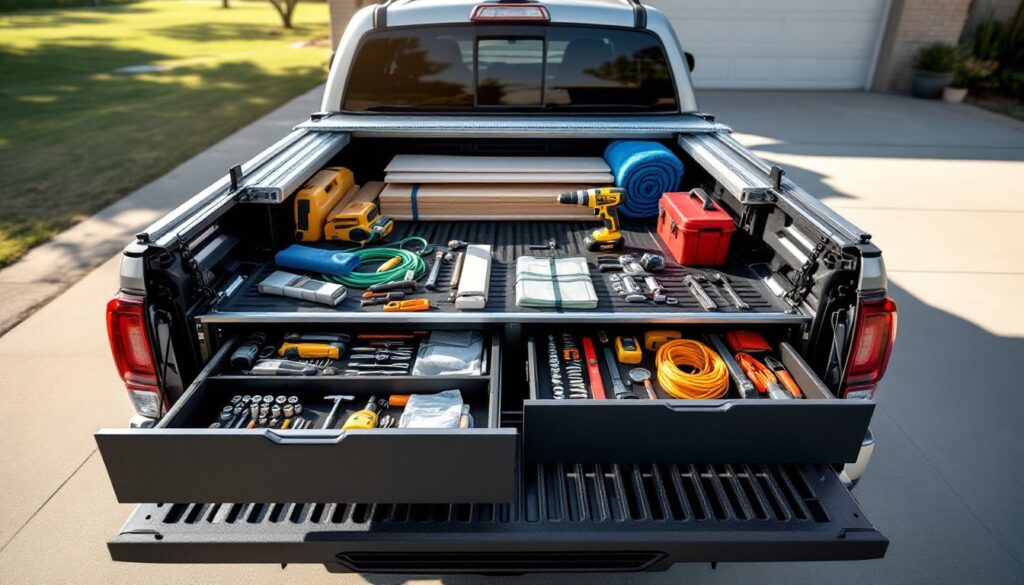
Drawer systems offer the gold standard for secure, weatherproof storage. These units install along the bed floor, typically running 40 to 48 inches wide and 10 to 12 inches deep. Heavy-duty ball-bearing slides support 150 to 200 pounds per drawer, enough for power tools, fasteners, and portable equipment.
Most systems feature aluminum construction with powder-coated finishes to resist corrosion from road salt, mud, and moisture. Locking mechanisms secure contents, while foam inserts or adjustable dividers keep items from shifting. Popular units leave 36 to 40 inches of vertical clearance above, preserving space for plywood sheets, ladders, or larger cargo.
Installation requires drilling into bed rails or using clamp-style mounts. Expect 2 to 4 hours for a two-drawer setup with basic hand tools. Some systems integrate with tonneau covers, though clearance must be verified, measure twice before ordering.
Slide-out organizers provide a simpler alternative. These platforms mount on rails and extend rearward for easy access. Weight capacity ranges from 500 to 1,000 pounds for full-extension models, suitable for toolboxes, coolers, or bulk materials. Unlike drawers, slide-outs leave the top surface open for stacking, making them versatile for mixed loads.
Drawbacks? Cost runs $800 to $2,000 for quality drawer systems. Weight adds 100 to 150 pounds, reducing payload capacity slightly. And installation isn’t reversible without leaving mounting holes, consider long-term plans before committing.
Bed Dividers and Cargo Management Rails
Bed dividers create adjustable compartments using vertical partitions. Most systems feature aluminum or composite panels that slot into factory tie-down points or aftermarket rail systems. Heights range from 12 to 18 inches, enough to corral 2x4s, pipe, or bags of concrete without building permanent structures.
Adjustability is the key advantage. Move dividers forward or back to match load sizes, haul an 8-foot ladder one day, then reconfigure for a pile of garden supplies the next. Removal takes seconds, restoring full bed access for oversized items.
Cargo management rails (also called track systems) bolt along bed sides, providing mounting points for cleats, anchors, and tie-downs. The most common format uses T-slot aluminum extrusions running the bed’s length. Accessories slide into place and lock down with hand-tightened knobs, no tools required on site.
Rails excel for securing irregular loads. Strap down a lawnmower, brace a sheet of drywall, or mount a bike rack using the same system. Many DIYers and homeowners prefer building around rail systems for woodworking projects like custom toolboxes or removable shelf units.
Installation requires drilling through bed sides into factory mounting points or structural ribs. Use stainless steel hardware to prevent rust, and apply thread locker to bolts, vibration from rough roads will loosen untreated fasteners. Budget 1 to 2 hours for a basic rail install.
Limitations? Bed dividers won’t secure loose items, pair them with bungee nets or ratchet straps. Rail systems add cost ($150 to $400) and slight weight, though far less than drawer units. And drilling into the bed is permanent, affecting resale value if future buyers want a clean bed.
DIY Tacoma Truck Bed Storage Ideas You Can Build at Home
Homeowners with basic carpentry skills can build custom storage for a fraction of commercial prices. Start with a plywood drawer box mounted on heavy-duty drawer slides. Use 3/4-inch Baltic birch plywood for strength and smooth surfaces. Cut sides, front, back, and bottom to fit between wheel wells (typically 48 inches wide in a Tacoma short bed).
Assemble with wood glue and 1-1/4-inch brad nails, reinforcing corners with steel L-brackets. Mount 500-pound-capacity full-extension slides (available at hardware stores for $40 to $80 per pair) to a plywood base that bolts to factory tie-down points. Finish with exterior-grade polyurethane or truck bed liner coating for weather resistance.
Add a false floor to create under-bed storage without permanent modifications. Cut 3/4-inch plywood to bed dimensions, resting it on 2×4 or 2×6 runners secured to bed sides with L-brackets. The 1.5 to 5.5 inches of clearance underneath hides flat items, tarps, straps, hand tools, while the top surface carries everyday cargo. This approach preserves bed access and removes in minutes.
PVC pipe organizers handle long items cheaply. Cut 4-inch PVC pipe into 10 to 12-inch lengths, then mount them horizontally along bed sides using pipe clamps and self-tapping screws. Each tube stores levels, pry bars, stakes, or fishing rods, keeping them off the bed floor and visible.
For serious builders, a modular shelf unit offers maximum flexibility. Frame it with 2×4 or 2×6 lumber, creating a box structure that spans the bed width. Add removable shelves using 3/4-inch plywood and shelf pins (like bookshelf construction). Dimensions should leave 6 to 8 inches between shelves for toolboxes, paint cans, or storage bins.
Secure the unit with lag bolts through the frame into bed rails or tie-down points. Use galvanized or stainless steel fasteners to avoid rust. Finish with a coat of exterior paint or stain, raw wood absorbs moisture and warps.
Many home improvement guides detail similar builds with cut lists and assembly steps. The advantage of DIY? Perfect fit for your exact needs, whether that’s a spot for a chainsaw, a slide-out for compressor hoses, or a locking compartment for valuables.
Safety note: When cutting plywood or lumber, wear eye protection and a dust mask. Use a circular saw with a guide for straight cuts, or a table saw for precision. Sand all edges to prevent splinters, truck beds see rough handling.
How to Choose the Right Storage Solution for Your Needs
Start by auditing what you haul. Weekly lumber runs? Prioritize open bed space and adjustable dividers. Daily tool transport? Lockable drawers protect investments. Mixed use, camping gear, sports equipment, home supplies, calls for modular systems that reconfigure quickly.
Payload capacity limits how much weight you can add. A 2024 Tacoma TRD Off-Road with the V6 has a payload around 1,175 to 1,280 pounds (varies by configuration). Subtract passenger weight, fuel, and cargo, then account for storage system weight. A 150-pound drawer setup leaves less room for materials, so calculate total load before buying.
Access frequency determines drawer versus divider choices. If you grab tools multiple times per job, drawers beat digging through a pile. For occasional use, emergency kits, seasonal gear, simple bins and cargo nets suffice.
Weather exposure matters in regions with rain, snow, or high humidity. Aluminum and marine-grade plywood resist moisture better than particle board or untreated wood. If you park outdoors year-round, invest in sealed systems or waterproof coatings.
Tonneau cover compatibility affects clearance. Soft roll-up covers typically allow 10 to 12 inches of storage height. Hard folding covers may limit drawer systems to 8 inches. Measure before purchasing, returns on truck accessories are often restricted.
Budget reality: Commercial drawer systems run $800 to $2,000. Bed dividers and rails cost $150 to $500. DIY builds range from $100 to $400 depending on materials and hardware. Don’t cheap out on slides, fasteners, or finish, failures on the road cost more than the savings.
Compare your needs against tested organizer systems to see what features matter most for your hauling habits. Match the system to the job, not the trend.
Conclusion
Organized truck bed storage turns a Tacoma from a hauler into a mobile workshop. Whether installing a commercial drawer system, mounting cargo rails, or building custom shelves at home, the goal is the same: quick access, secure transport, and efficient use of every inch. Measure the bed, assess typical loads, and choose systems that adapt as projects change. The right setup pays for itself in saved time and protected gear.