Bathroom storage is where function meets frustration. Towels stacked on toilet tanks, toiletries crowding the sink, cleaning supplies shoved under the vanity, it’s a familiar scene. But the right storage cabinet changes everything. It corrals chaos, reclaims counter space, and turns a cramped bathroom into a functional, organized space. Whether dealing with a powder room with zero closet space or a master bath that’s all style and no substance, a well-chosen cabinet is the fix that actually sticks.
Table of Contents
ToggleKey Takeaways
- A storage bathroom cabinet eliminates clutter by providing dedicated homes for towels, toiletries, and cleaning supplies while protecting items from humidity and moisture damage.
- Choose between wall-mounted cabinets to save floor space or freestanding storage cabinet options based on your bathroom size, with wall-mounted requiring stud anchoring and freestanding offering easier repositioning.
- Material selection is critical—solid wood, plywood with water-resistant veneer, and powder-coated metal resist bathroom humidity better than MDF, which swells when exposed to moisture.
- Proper measurements and layout planning prevent costly mistakes; ensure your storage cabinet doesn’t interfere with toilet clearances (15 inches from center) or block door and fixture access.
- Organize your bathroom cabinet using adjustable shelves, pull-out drawers, door-mounted organizers, and labeled bins to maximize storage efficiency and prevent clutter from returning.
- Wall-mounted cabinet installation requires locating studs, marking mounting holes, drilling pilot holes, and securing with 3-inch screws into solid framing for a safe, durable installation.
Why Every Bathroom Needs a Storage Cabinet
Bathrooms are small. Even generous ones run out of real estate fast once you account for fixtures, clearances, and the swing radius of the door. A storage cabinet addresses this head-on by adding vertical or tucked-away storage without eating into floor space.
Storage cabinets prevent clutter creep. Without dedicated homes for items, counters become dumping grounds. Cabinets with adjustable shelves let users customize storage heights for tall bottles, stacked linens, or shallow bins of daily-use products.
They also protect items from humidity. Bathrooms cycle between steam and dry air, which warps cardboard packaging and degrades certain products. A cabinet with a closed door shields contents from moisture while keeping dust off spare towels and bulk toilet paper.
From a resale perspective, buyers notice storage. A bathroom with built-in or well-integrated cabinetry reads as intentional and finished. It’s a small upgrade with an outsized impact on perceived value.
Types of Bathroom Storage Cabinets to Consider
Bathroom cabinets fall into several categories, each suited to different layouts and needs.
Over-the-toilet cabinets make use of wasted vertical space above the tank. Most units are freestanding, with legs or side panels that straddle the toilet. Standard widths run 23 to 28 inches to fit most toilets. Look for open shelving at eye level for easy access and enclosed storage below to hide less attractive items.
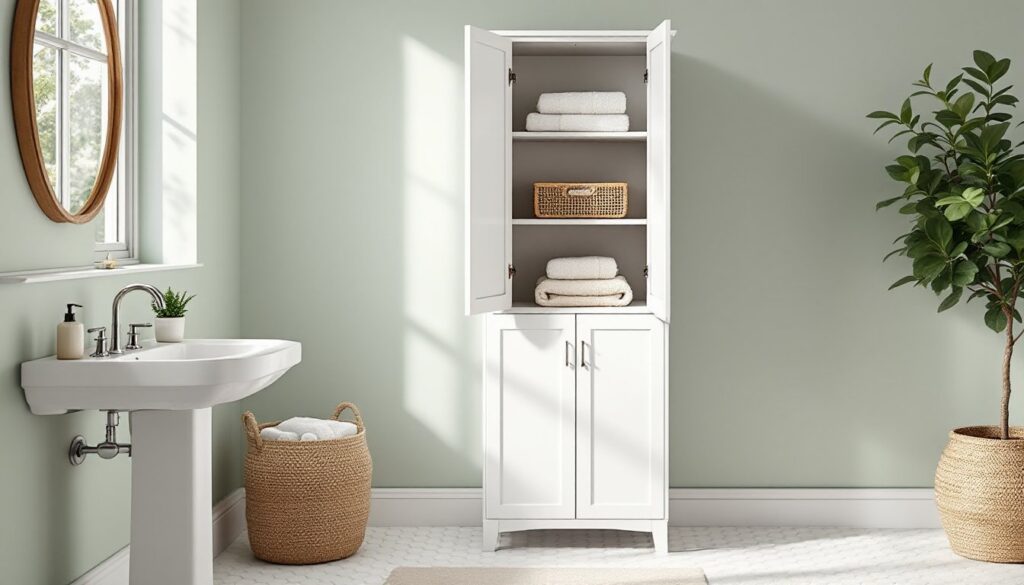
Linen towers are tall, narrow cabinets, typically 12 to 18 inches wide and 60 to 72 inches high. They fit into tight corners or alongside vanities. Many include a mix of shelves, drawers, and cabinet sections. They’re ideal for storing towels, extra bedding, or cleaning supplies.
Medicine cabinets mount on the wall, often recessed between studs or surface-mounted over the sink. Recessed models save space but require access to stud bays and may involve drywall patching if replacing an existing unit. Surface-mounted versions install faster but project a few inches into the room.
Under-sink cabinets (vanity cabinets) are the workhorses of bathroom storage. They house plumbing and provide drawer or shelf space. Retrofitting slide-out organizers or stackable bins maximizes awkward spaces around P-traps.
For those with specific dimensions or design goals, custom furniture plans offer templates for DIY builds that fit nonstandard spaces.
Wall-Mounted vs. Freestanding Cabinets
Wall-mounted cabinets attach directly to studs, freeing up floor space and simplifying cleaning underneath. They work well in small bathrooms where every square inch of floor matters. Installation requires locating studs with a stud finder, drilling pilot holes, and securing with 3-inch screws into solid framing. Use a level during installation, shimming may be needed on older walls that aren’t perfectly plumb.
Freestanding cabinets rest on the floor and require no wall anchoring (though securing them to studs is smart in earthquake-prone areas or homes with kids). They’re easier to move or replace and don’t demand precision drilling. The trade-off: they occupy floor space and can make a small bathroom feel more cramped. For narrow bathrooms, opt for units no deeper than 14 inches to maintain clearances.
How to Choose the Right Storage Cabinet for Your Bathroom
Choosing a cabinet starts with an honest assessment of what needs to be stored and where it can physically fit.
Material matters. Bathrooms are humid environments. Solid wood cabinets are durable and attractive but need sealing or a moisture-resistant finish to prevent warping. MDF (medium-density fiberboard) is cheaper and stable but swells if it gets wet, only use it if the cabinet will stay dry. Plywood with a water-resistant veneer or finish strikes a balance between cost and durability. Metal and wire cabinets resist moisture but may rust in high-humidity bathrooms unless powder-coated or stainless.
Finish and hardware should tolerate steam and splashes. Look for cabinets with sealed or laminated finishes rather than raw or painted surfaces that chip easily. Drawer glides rated for bathroom use resist corrosion. Soft-close hinges reduce wear from repeated slamming.
Consider door swing and clearance. A cabinet door that blocks the toilet or shower entry is a daily annoyance. Measure the swing radius before buying. Sliding doors or open shelving can work in tight spots.
Inspiration and curated product roundups from sites like Remodelista can help narrow down finishes and styles that suit the bathroom’s overall design direction.
Measuring Your Space and Assessing Your Needs
Always measure twice. Start with the width of the available space, then measure depth from the wall to any obstacles (door swing, fixtures, towel bars). Note ceiling height if considering a tall cabinet, leaving 6 to 12 inches of clearance below the ceiling prevents a claustrophobic feel.
Standard bathroom clearances per the International Residential Code (IRC) require at least 15 inches from the center of a toilet to any side wall or obstruction, and 30 inches of clear floor space in front of fixtures. Don’t let a new cabinet encroach on these minimums.
Make a list of what needs storage: towels, toiletries, cleaning products, hair tools, medications, spare toilet paper. Group items by frequency of use. Daily items should land at eye level: occasional-use or bulk items can go high or low.
Sketch the bathroom layout to scale on graph paper or use a tape measure and painter’s tape to mock up cabinet footprints on the floor and wall. This catches conflicts before money changes hands.
Creative Ways to Organize Your Bathroom Cabinet
A cabinet is only as useful as its organization system. Without dividers or bins, shelves turn into jumbled stacks.
Use adjustable shelving to customize heights. Store tall bottles on lower shelves, folded towels or bins on upper ones. Most cabinets come with pre-drilled holes at 32mm intervals (the European standard) for shelf pins.
Install pull-out drawers or baskets in deep cabinets to bring items forward. Sliding wire baskets work well for cleaning supplies or hair tools. Retrofit units are available at home centers and mount to existing shelves with screws or adhesive.
Add door-mounted organizers for small items like makeup, razors, or travel-size toiletries. Over-the-door racks or adhesive pockets make use of wasted interior door space.
Label bins and baskets. It sounds basic, but labeled storage prevents the “junk drawer” effect. Use chalkboard labels or a label maker for a clean look.
For bathrooms with limited cabinet space, combining cabinetry with shower storage strategies extends organization into the wet zone, keeping daily-use products accessible without crowding counters.
Rotate seasonal items. Store sunscreen and beach towels front-and-center in summer, swap in extra blankets or cold-weather gear in winter. This keeps the cabinet relevant year-round and prevents overflow.
Installing Your Bathroom Storage Cabinet: A Step-by-Step Guide
Installing a wall-mounted cabinet is straightforward but demands precision. A freestanding unit is even simpler, just position and level it. Here’s the process for a wall-mounted cabinet, the more involved of the two.
Tools and materials:
- Stud finder
- Level (24-inch or longer)
- Drill/driver with bits
- 3-inch wood screws (for studs)
- Wall anchors (if studs aren’t available)
- Pencil
- Tape measure
- Safety glasses
Step-by-step installation:
-
Locate studs. Use a stud finder to mark stud centers. Standard stud spacing is 16 inches on center, but older homes may vary. Mark the height where the cabinet will hang, accounting for any molding or obstacles.
-
Mark mounting holes. Hold the cabinet against the wall (or have a helper do it) and use a level to ensure it’s plumb. Mark the screw hole locations through the cabinet’s mounting rail or bracket. Some cabinets have a keyhole-style hanger: mark where the screws will land.
-
Drill pilot holes. Drill into the stud at each mark using a bit slightly smaller than the screw diameter. For drywall without a stud, drill a hole sized for a toggle bolt or heavy-duty anchor rated for the cabinet’s weight.
-
Attach the cabinet. Drive 3-inch screws through the cabinet frame into studs. If using anchors, install them first, then hang the cabinet. Check level again before fully tightening, small adjustments are easier now than after the cabinet is loaded.
-
Secure shelving and hardware. Insert shelf pins, attach doors if they shipped separately, and test hinges and latches.
Safety notes: Wear safety glasses when drilling overhead. If the cabinet weighs more than 50 pounds, get help lifting it. Don’t rely solely on drywall anchors for heavy cabinets, at least two screws should hit solid framing.
For a curated selection of ready-to-install options, browsing bathroom cabinet collections can help match finish, size, and style to the project at hand.
A storage cabinet isn’t glamorous, but it’s the difference between a bathroom that works and one that constantly frustrates. Choose the right type, size, and material, install it securely, and organize thoughtfully, the payoff is a cleaner, calmer space that actually holds what it needs to.