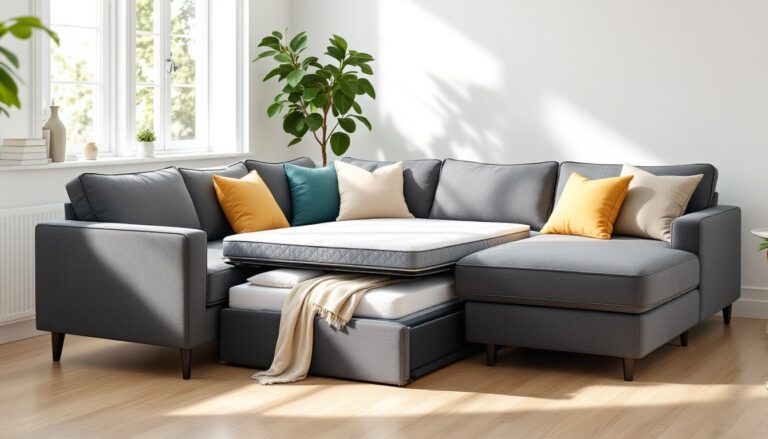
Small bedrooms and kids’ rooms often share the same challenge: finding space for both sleeping and storage without cramping the room. A twin bed frame with built-in storage tackles this problem head-on by reclaiming the roughly 14 cubic feet of wasted space beneath a standard twin mattress. Whether setting up a child’s bedroom, a guest room, or a studio apartment, these dual-purpose frames eliminate the need for bulky dressers or under-bed bins that collect dust. The right storage bed can hold everything from off-season clothing to extra bedding, toys, or books while maintaining clean sight lines and functional floor space.
Table of Contents
ToggleKey Takeaways
- Twin size bed frames with storage reclaim approximately 14 cubic feet of wasted space beneath a standard twin mattress while eliminating the need for bulky dressers or under-bed bins.
- Storage bed frames come in three main types—drawer-based designs, lift-up hydraulic frames, and bookcase headboards—each offering distinct advantages for different room layouts and storage needs.
- Quality drawer glides with ball-bearing mechanisms and weight capacities of 75–100 pounds provide smoother, longer-lasting operation than budget models with plastic rollers that max out around 50 pounds.
- Solid wood twin storage frames offer superior durability and structural integrity compared to engineered wood alternatives, with mortise-and-tenon or dowel joinery indicating superior build quality.
- Proper room measurements and ceiling height clearance are essential before purchasing, as drawer frames add 3–5 inches to overall width and lift-up frames require approximately 58 inches of vertical clearance.
- Using wall-anchoring brackets on tall bookcase headboards prevents tip-over accidents, a critical safety consideration in children’s bedrooms despite not being mandated by building codes.
Why Choose a Twin Bed Frame With Storage?
The floor space beneath a twin mattress, typically 39 inches by 75 inches, represents valuable real estate in any bedroom. Traditional bed frames leave this area either empty or cluttered with plastic bins that slide around and gather dust.
Storage bed frames solve this by integrating drawers, shelves, or lift-up compartments directly into the frame structure. This design keeps items clean, organized, and accessible without requiring additional furniture. For a child’s bedroom, that means fewer dressers to navigate around during bedtime routines. In guest rooms, it provides a dedicated spot for extra linens and pillows.
These frames also improve safety in kids’ rooms by eliminating the need to climb or reach high shelves. Drawer-style storage keeps clothing and toys at floor level, making it easier for children to put items away independently.
From a structural standpoint, quality storage frames use the same support systems as standard bed frames, slat systems or platform bases that distribute mattress weight across the frame. The added storage components don’t compromise mattress support when properly constructed. Look for frames with center support beams on models wider than 36 inches to prevent sagging over time.
Types of Twin Storage Bed Frames
Drawer Storage Bed Frames
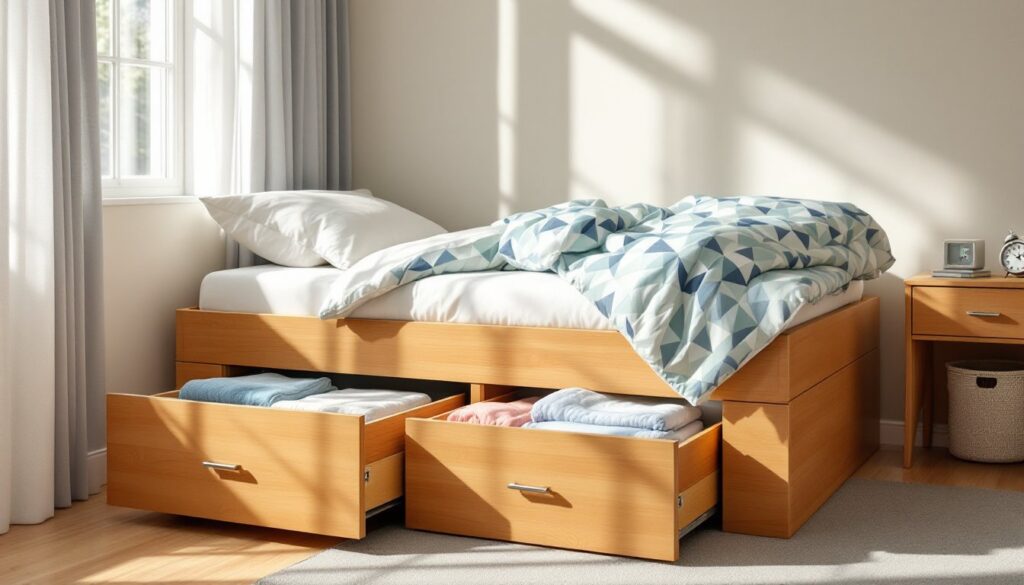
Drawer-based designs are the most common storage bed configuration. They typically feature three to six drawers built into the frame’s side rails or footboard area. Drawers run on metal glides or wooden runners, with ball-bearing glides offering smoother operation and better weight capacity.
Side-mounted drawers require clearance space, plan for 18 to 24 inches of open floor space on the drawer side for full extension. Euro glides or undermount slides allow drawers to pull out fully, making it easier to access items at the back. Cheaper frames use simple grooved runners that can stick or bind over time, especially if the floor isn’t perfectly level.
Some designs place drawers at the footboard instead, which works better in rooms where the bed sits against a wall. These furniture building tutorials often show how to customize drawer placement based on room layout. Drawer depths typically range from 4 to 8 inches, with deeper drawers suited for bulky items like comforters or sweaters.
Check weight ratings on drawer glides, budget models max out around 50 pounds per drawer, while heavy-duty slides handle 75 to 100 pounds. For kids’ rooms storing toys or books, higher weight capacity prevents hardware failure.
Lift-Up Storage Bed Frames
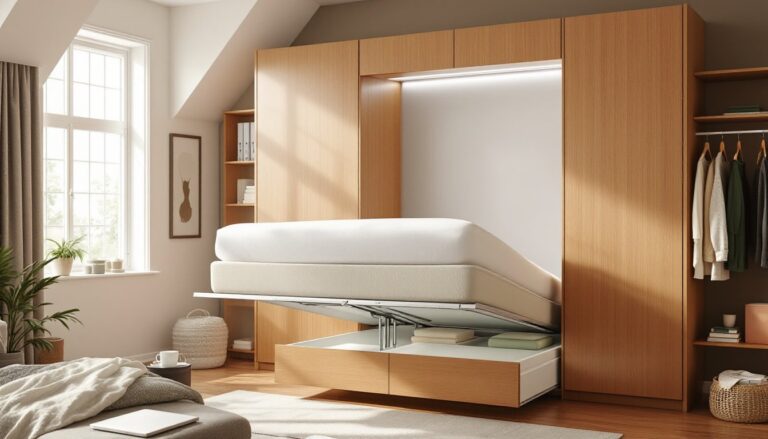
Lift-up (or hydraulic) storage frames use gas-lift pistons to raise the entire mattress platform, revealing a large storage cavity beneath. This design maximizes storage volume, most twin lift-up frames offer 8 to 12 cubic feet of space.
The lifting mechanism typically uses nitrogen gas struts rated for the combined weight of the platform and mattress. Quality struts lift smoothly and hold the platform open without slamming shut. Cheaper models use manual hinges that require two hands and can pinch fingers.
Lift-up frames work well for storing items that don’t need daily access: seasonal clothing, extra bedding, or luggage. Because you’re lifting the mattress, bedding stays in place, no need to strip sheets like you would to access under-bed bins.
Installation requires careful attention to the piston mounting points. Most frames have pre-drilled holes, but verify that screws penetrate solid wood or metal, not particle board. Pistons mounted to weak material will tear out under repeated use.
One drawback: if a gas strut fails, the mattress platform can drop suddenly. Replace worn struts immediately. Most manufacturers sell replacement pistons rated by weight class, match the new strut to your specific frame model.
Bookcase and Shelving Bed Frames
Bookcase-style frames incorporate open shelving or cubbies into the headboard, footboard, or side rails. These designs prioritize accessibility over concealed storage, ideal for displaying books, alarm clocks, or decorative items within arm’s reach.
Headboard shelving typically adds 6 to 12 inches to the overall bed depth, which matters in tight rooms. Measure your available wall space carefully: a bookcase headboard can push the mattress far enough forward that nightstands no longer fit beside the bed.
Captain’s bed designs combine open shelving with enclosed storage, offering both display space and hidden compartments. The raised platform height, usually 18 to 24 inches from the floor, creates cubby space underneath while keeping shelving at mattress level.
Stability becomes critical with tall bookcase headboards. Look for frames with wall-anchoring brackets to prevent tip-over, especially in kids’ rooms. The International Residential Code (IRC) doesn’t mandate anchoring for beds, but furniture tip-over accidents injure thousands of children annually. Use the included straps or L-brackets to secure the headboard to wall studs.
How to Choose the Right Twin Storage Bed Frame for Your Space
Start by measuring the bedroom dimensions and mapping out furniture placement. A twin bed frame measures roughly 39 inches wide by 75 inches long, but storage features add width and depth.
Drawer frames add 3 to 5 inches to the overall width on the drawer side. Bookcase headboards extend 6 to 12 inches behind the mattress. Account for these dimensions when sketching your floor plan.
Ceiling height affects lift-up frames. When raised, the mattress platform sits at approximately 45 to 50 inches above the floor. Add another 8 inches for mattress thickness, and you need roughly 58 inches of clearance to avoid bumping the ceiling. Standard ceiling height is 96 inches, so this rarely poses problems, but attic bedrooms or rooms with sloped ceilings require measurement.
Consider who’ll use the storage. For young children, drawer storage keeps items accessible without climbing. Teens might prefer lift-up storage for larger items like sports equipment or luggage. Guest rooms benefit from concealed storage that keeps linens tidy but accessible for quick turnovers.
Room layout dictates drawer orientation. If the bed sits against a wall with only one accessible side, choose a frame with drawers on the open side or opt for footboard storage instead. Making smart decisions about storage early in the planning process prevents buyer’s remorse.
Weight capacity matters, especially for kids who might climb or jump. Quality twin storage frames support 250 to 500 pounds of distributed weight. Check manufacturer specs for both the mattress platform and individual drawer ratings.
Assembly complexity varies widely. Simple drawer frames with bolt-together construction can be assembled by one person in 60 to 90 minutes. Lift-up frames with hydraulic pistons require precise alignment, plan for two people and 2 to 3 hours. If you’re uncomfortable with assembly, many furniture retailers offer setup services for $75 to $150.
Best Materials for Durability and Style
Solid wood frames offer the best longevity and structural integrity. Pine, oak, maple, and poplar are common choices. Solid wood handles stress better than composites, especially at joinery points where screws and bolts attach. Expect to pay $300 to $800 for a quality solid wood twin storage frame.
Pine is affordable and easy to stain or paint, but it’s a softer wood that dents more easily than hardwoods. Oak and maple resist wear better, making them ideal for kids’ rooms where furniture takes a beating. Many DIY furniture projects use dimensional lumber like 2×4s and 2×6s (actual dimensions 1.5×3.5 and 1.5×5.5 inches) to build custom storage beds from solid wood.
Engineered wood, MDF, particleboard, or plywood, costs less but varies in quality. Plywood with hardwood veneer holds screws well and resists warping better than particleboard. MDF provides a smooth surface for paint but lacks the screw-holding power of solid wood or plywood. Particle board is the weakest option: it crumbles around screw holes after repeated assembly or if exposed to moisture.
Check edge banding on engineered wood frames. Quality manufacturers apply PVC or wood veneer edge banding to cover raw particle board edges, which improves appearance and moisture resistance.
Metal frames use steel tubing or wrought iron for a more industrial look. Metal resists warping and insect damage but lacks the warmth of wood. Powder-coated finishes prevent rust, though scratches expose bare metal that can corrode over time. Metal frames with wood drawer boxes combine durability with functional storage.
Joinery methods reveal build quality. Look for mortise-and-tenon joints, dowel joints, or pocket-screw construction in solid wood frames. Butt joints held only by screws or cam locks are weaker and prone to loosening.
Finish quality affects both appearance and durability. Low-VOC water-based finishes are safer for kids’ rooms and comply with California Air Resources Board (CARB) emissions standards, which many manufacturers now follow nationwide. Oil-based finishes offer deeper color penetration but require longer off-gassing time before use.
For those building their own, many DIY storage bed designs provide cut lists and assembly instructions. Building from scratch allows customization of drawer count, depth, and finish while often costing 30 to 50 percent less than retail.
Hardware quality separates budget frames from long-lasting ones. Ball-bearing drawer glides cost more than plastic rollers but operate smoothly for years. European-style hinges on lift-up frames adjust in three dimensions, making it easier to align the mattress platform perfectly. Gas struts should be branded (Stabilus and Suspa are reputable manufacturers) rather than generic no-name pistons.
Mattress support matters as much as storage features. Platform beds with closely spaced slats (3 inches apart or less) support memory foam and latex mattresses without a box spring. Wider slat spacing requires a bunkie board, a thin plywood panel that prevents mattress sagging between slats.