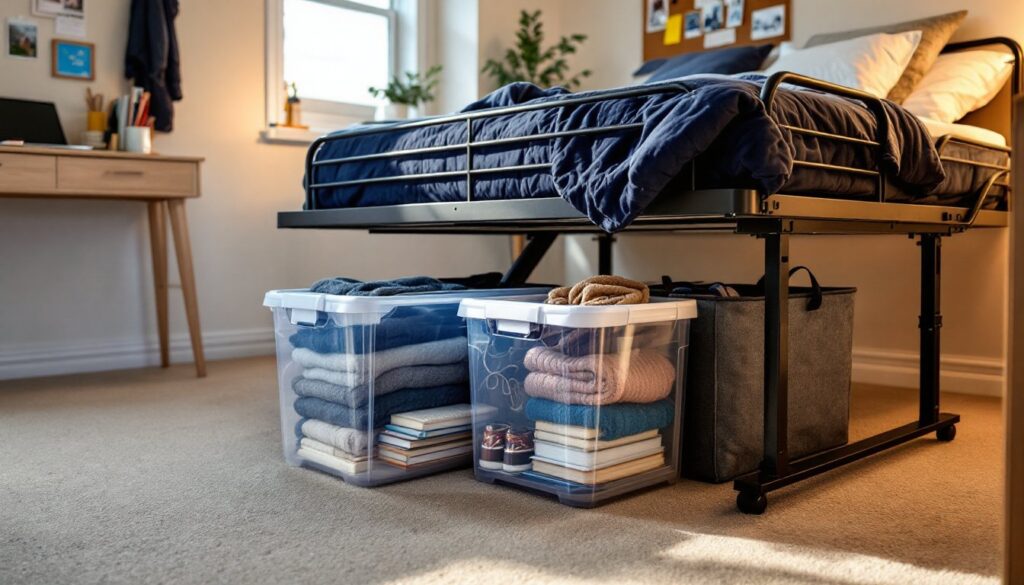
Dorm rooms are notoriously short on square footage, typically 100 to 150 square feet for two students. That translates to roughly 50 to 75 square feet of personal real estate, closet included. When vertical storage maxes out and closet rods groan under the weight of hoodies and winter coats, there’s one largely untapped area left: the space beneath the bed. Most standard dorm beds sit just 12 to 16 inches off the floor, but adjustable-height bed frames can raise that clearance to 20 to 30 inches, creating valuable storage real estate without sacrificing a single inch of floor plan.
Table of Contents
ToggleKey Takeaways
- Under bed storage in dorm rooms can hold 20 to 40 gallons of gear by utilizing the typically wasted 12 to 30 inches of clearance beneath the bed frame.
- Rolling storage bins with hard plastic construction and swivel casters are the most practical choice for under bed storage, offering easy accessibility and mobility on dorm floors.
- Vacuum-sealed bags compress bulky seasonal items like comforters to one-third their original size, making them ideal for rotating clothes between semesters without long-term mildew risk.
- DIY under bed storage solutions like repurposed cardboard boxes, plywood platforms with casters, or salvaged dresser drawers can cost as little as $10 to $20 compared to $15 to $50 for commercial bins.
- Maximize under bed storage efficiency by measuring clearance at multiple points, prioritizing daily-use items toward the front, and stacking bins vertically in taller spaces to double capacity.
- Always check dorm policies before adjusting bed frames or adding risers, and avoid storing flammable items under beds due to fire code regulations in residential spaces.
Why Under Bed Storage Is Essential for Dorm Living
Dorm living isn’t just cramped, it’s a logistical puzzle. Most students arrive with seasonal clothing, textbooks, sports equipment, mini fridges, and enough bedding to outfit a small hotel. Without smart storage, clutter accumulates fast, turning study spaces into obstacle courses.
Under bed storage serves three critical functions: it reclaims dead space, keeps seasonal or infrequently used items accessible, and maintains floor space for movement and functionality. A well-organized under-bed zone can hold 20 to 40 gallons of gear, depending on bed height and container choices. That’s enough for off-season clothes, extra bedding, shoes, sports gear, or bulky textbooks that don’t fit on the desk.
Many dorm beds come with adjustable frames. If the bed sits low, raising it to the maximum height (typically 24 to 30 inches) creates clearance for larger bins or drawers. Check with Residential Life before modifying bed frames, some schools allow bed risers, while others prohibit aftermarket adjustments due to fire codes or structural concerns.
Another factor: accessibility. Unlike closet shelves or overhead storage, under-bed containers slide out at floor level, making retrieval quick and safe. No stepladders, no reaching overhead with a box of winter boots teetering above.
Best Types of Under Bed Storage Solutions for Dorms
Not all storage containers are created equal. Dorm-specific solutions need to be durable, mobile, and sized to fit tight clearances. Here’s what works.
Rolling Storage Bins and Drawers
Rolling bins are the workhorses of under-bed storage. Look for hard plastic or polypropylene containers with smooth-gliding casters rated for 10 to 20 pounds. Soft-sided fabric bins sag under weight and snag on carpet, making them frustrating to slide in and out.
Standard under-bed bins measure 24 to 30 inches long, 14 to 18 inches wide, and 6 to 12 inches tall. Before buying, measure bed clearance from floor to frame (not mattress bottom). Subtract 1 inch for clearance, a 10-inch bin won’t fit under a bed with 10 inches of clearance once you account for carpet pile or uneven floors.
Drawer-style organizers add compartments for smaller items like socks, chargers, or toiletries. Many feature removable dividers, which help separate clean gym clothes from dirty laundry or keep shoes from tumbling into folded sweaters. Modular storage systems with stackable bins work well if bed height allows for two-tier configurations.
Wheels matter. Fixed casters can jam on dorm carpet seams or transitions between tile and carpet. Swivel casters navigate tight corners better but may not lock in place. If the dorm has laminate or tile floors, rubberized wheels prevent scratching and reduce noise during late-night retrieval missions.
Vacuum-Sealed Bags for Seasonal Items
Vacuum-sealed storage bags compress bulky items like comforters, winter coats, and fleece blankets down to one-third their original volume. A queen-size comforter typically measures 12 to 15 inches thick when folded: sealed, it flattens to 3 to 4 inches.
These bags work best for seasonal rotation. Pack away winter gear in spring, then swap it back in fall. Don’t store items long-term in vacuum bags, fabrics need airflow to prevent mildew, especially in humid climates or dorms without climate control.
Use a handheld vacuum or small shop vac to seal bags. Most dorms don’t allow upright vacuums in rooms due to noise ordinances, and lugging a full-size vacuum down a hallway at move-in is impractical. Some bags include hand pumps, but they’re slow and require significant elbow grease.
Label bags with a permanent marker. In the chaos of finals week or holiday break packing, it’s easy to forget whether a bag holds bedding or jackets.
How to Maximize Under Bed Space in Your Dorm
Efficient under-bed storage isn’t just about buying bins, it’s about layout, accessibility, and rotation.
Measure twice, buy once. Use a tape measure to check bed clearance at multiple points. Dorm floors aren’t always level, and an uneven surface can reduce clearance by 1 to 2 inches in corners. Measure width between bed legs, too. Some lofted or adjustable frames have center support bars that limit bin width.
Prioritize by frequency. Store daily-use items like shoes or gym bags in the front or sides for quick access. Push seasonal clothes, extra bedding, or textbooks from completed courses toward the back. If the bed sits against a wall, front-access bins are essential, sliding a container out from the wall side requires moving furniture.
Use vertical dividers. Stackable bins or drawer units make better use of taller clearances. A bed raised to 24 inches can accommodate two 10-inch bins stacked, doubling capacity. Just ensure the bottom bin has reinforced sides, stacking crushes flimsy containers.
Anchor loose items. Rolling bins shift during movement or when roommates bump the bed. Velcro strips or non-slip shelf liners between bin and floor prevent sliding. This is especially useful in dorms with tile or polished concrete floors.
Rotate stock seasonally. At semester breaks, pull out off-season gear and take it home. Dorm storage is premium real estate, don’t waste it on a parka in May or flip-flops in January. Inspiration for organizing tight spaces often comes from small apartment strategies, where every inch counts.
Consider bed risers carefully. Aftermarket bed risers add 3 to 8 inches of clearance but may violate dorm policies. They also create stability issues, cheap plastic risers crack under weight or shift during sleep. If allowed, choose heavy-duty plastic or steel risers rated for 1,000+ pounds per set. Always check with Residential Life before installation.
DIY Under Bed Storage Ideas on a Student Budget
Pre-made bins cost $15 to $50 each, which adds up fast. DIY alternatives cut costs and customize storage for specific needs.
Repurpose cardboard boxes. Sturdy shipping boxes (think appliance or furniture packaging) work as temporary bins. Reinforce corners with duct tape and add rope or fabric handles by cutting hand-sized holes in the sides. Cover with contact paper or shelf liner for a cleaner look. Cardboard won’t survive multiple semesters, but it’s a solid freshman-year solution.
Build a rolling platform. A 2×3-foot sheet of 1/2-inch plywood (cut to size at a home center) plus four swivel casters creates a flat storage platform. Attach casters with 1-inch wood screws at each corner. Load it with stacked bins, shoe boxes, or loose items. Total cost: $10 to $20. This works especially well under lofted beds where vertical clearance exceeds 30 inches.
Use drawer organizers from thrift stores. Old dresser drawers (sans dresser) slide under beds perfectly. Hit up Goodwill or Habitat for Humanity ReStores for $2 to $5 drawers. Add casters or felt pads to the bottom for easier sliding. Paint or line with shelf paper if the wood’s rough.
Create vacuum bags from trash bags. Heavy-duty contractor bags (3-mil thickness or greater) plus a vacuum hose create makeshift compression storage. Seal the bag with a twist tie, insert the vacuum hose into a small opening, and suck out air. Fold the opening over and secure with packing tape. Not as durable as purpose-made vacuum bags, but effective for a semester.
Customize with crates. Plastic milk crates or wooden produce crates (available at craft stores or salvaged from grocery stores) stack and slide easily. They’re modular, so configurations adjust as needs change. Zip-tie crates together for added stability. Some design-focused resources showcase creative crate arrangements that double as room decor.
Install a bed skirt with pockets. Sew or safety-pin fabric pockets to a bed skirt for flat items like notebooks, charging cables, or magazines. Use canvas or denim for durability. This won’t replace bins for bulky items, but it adds small-item organization without floor space.
Scavenge moving supplies. Campus move-out week is a goldmine. Students discard bins, bed risers, and organizers they can’t take home. Scope out dumpster areas (respectfully) or check campus “free stuff” groups on social media. One person’s trash is another’s under-bed solution. For students seeking out additional creative storage hacks, budget-friendly IKEA mods offer dorm-specific inspiration.
Safety note: Avoid storing anything flammable (cleaning chemicals, aerosols, candles) under beds. Dorm fire codes prohibit open flames and combustible storage in sleeping areas. Keep emergency exit paths clear, under-bed bins shouldn’t block the door if the bed sits near the entrance.
Conclusion
Under-bed storage transforms cramped dorm rooms into functional living spaces. With clearances ranging from 12 to 30 inches and capacities hitting 40+ gallons, that overlooked zone holds a semester’s worth of gear. Whether opting for rolling bins, vacuum bags, or DIY crate systems, the goal stays the same: reclaim floor space, stay organized, and keep essentials accessible without turning the room into a storage unit.