North Reading homes face unique storage challenges. Colonial-era properties with limited closet space, split-level homes with awkward nooks, and modern builds with open floor plans all share one thing: the need for practical, well-designed storage that doesn’t eat up living space. Whether someone’s dealing with a garage buried in seasonal gear or a bedroom closet that can’t hold a week’s worth of clothes, the right storage solution turns chaos into function. This guide walks through proven storage strategies tailored to North Reading homes, from custom installations to DIY builds that fit local property styles.
Table of Contents
ToggleKey Takeaways
- North Reading storage solutions must adapt to older Colonial and Cape Cod-style homes with shallow closets and split-level designs that standard off-the-shelf systems cannot accommodate.
- Custom closet systems with graduated shelving, double hang rods, and overhead compartments maximize vertical space in undersized closets and return 50–80% of installation costs at resale.
- Garage organization using wall-mounted tracks, overhead racks, and slatwall panels creates dedicated zones for seasonal storage, tools, and equipment while reclaiming wasted ceiling space.
- DIY projects like mudroom benches with cubbies ($150–$250) and floating shelves in awkward spaces offer budget-friendly alternatives for North Reading homes without requiring advanced carpentry skills.
- When hiring professionals, request detailed quotes with material breakdowns, verify Massachusetts Home Improvement Contractor registration and liability insurance, and ask about permit requirements upfront.
Why North Reading Homeowners Need Custom Storage Solutions
Most North Reading homes weren’t designed for modern storage demands. Properties built before 1980 typically feature shallow closets, sometimes just 18 inches deep, sized for wardrobes and seasonal items, not year-round wardrobes or bulky winter gear. Split-level and raised ranch designs, common throughout the area, create short walls and sloped ceilings that limit standard shelving options.
New England weather compounds the problem. Winter coats, boots, snow shovels, and ice melt need dedicated space from October through April. Lawn equipment, patio furniture, and gardening supplies demand storage the rest of the year. Without purpose-built systems, homeowners cycle clutter from garage to basement to attic.
Custom storage addresses these issues by working with existing architecture instead of against it. A system designed for a sloped ceiling in a Cape Cod-style home uses graduated shelving heights. Closet organizers built for narrow footprints maximize vertical space with double hang rods and overhead compartments. Garage systems account for seasonal swaps with adjustable shelving and ceiling-mounted racks.
Property value matters, too. Updated storage ranks high on buyer priority lists, especially in competitive markets. Custom closets, organized garages, and functional mudrooms signal a well-maintained home and often return 50-80% of installation costs at resale.
Popular Storage Solutions for North Reading Homes
Custom Closet Systems
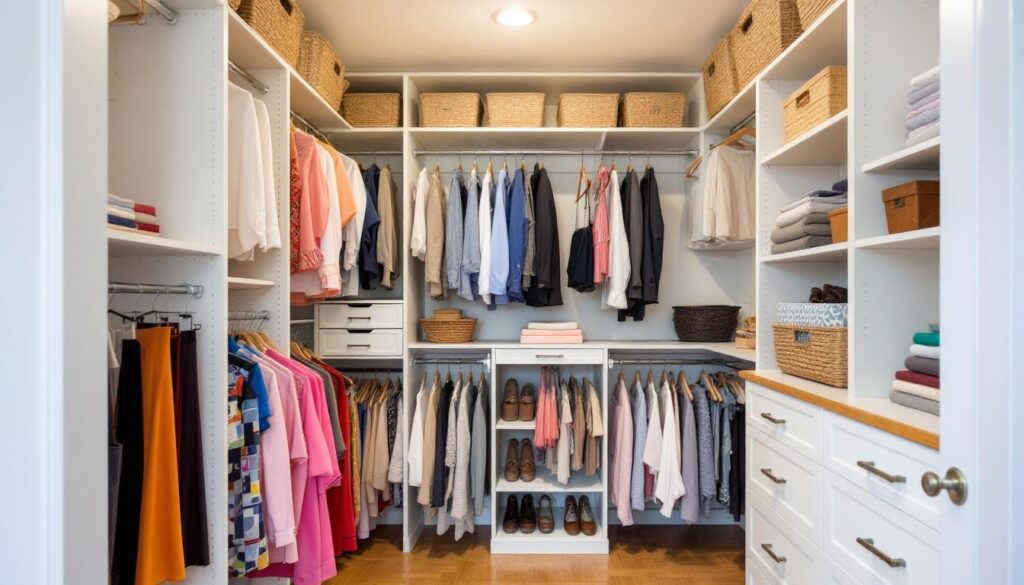
Custom closet systems tackle North Reading’s older, undersized closets with modular shelving, adjustable rods, and specialty accessories. A typical walk-in closet conversion starts with removing the single rod and shelf, then installing a floor-to-ceiling framework.
Materials vary by budget and use:
- Wire shelving: Affordable ($3–$6 per linear foot), ventilated, and DIY-friendly. Works well in climate-controlled spaces but sags under heavy loads.
- Melamine or laminate systems: Mid-range ($8–$15 per linear foot), available in white or wood-grain finishes. Supports heavier items than wire: requires careful installation to prevent chipboard edge damage.
- Solid wood or plywood with hardwood edging: Premium option ($18–$35 per linear foot). Most durable, fully customizable, but requires advanced carpentry skills or professional installation.
Key components include double hang rods for shirts and pants (mount the top rod at 80 inches, bottom at 40 inches for maximum efficiency), drawer units for folded items and accessories, and adjustable shelving that adapts as storage needs change. Corner solutions and pull-out racks recover dead space in L-shaped closets.
For reach-in closets common in bedrooms and hallways, focus on vertical zones. Mount rods at varying heights, add shelf dividers to prevent stack collapse, and use the top 12 inches, often wasted, for bins or seasonal items. Many homeowners incorporate creative storage ideas that adapt to tight footprints.
Garage Organization Solutions
North Reading garages serve triple duty: car storage, workshop, and seasonal overflow. Effective systems separate these functions with dedicated zones.
Wall-mounted track systems anchor to studs and accept modular hooks, baskets, and tool holders. Heavy-duty versions (rated for 50+ pounds per bracket) handle lawn equipment, ladders, and bikes. Install tracks at 48 inches from the floor for comfortable access to frequently used items: add a second run at 72 inches for less common gear.
Overhead storage racks reclaim ceiling space, ideal for holiday decorations, camping equipment, and bulky items used a few times per year. Most systems mount to ceiling joists and hold 250–600 pounds depending on design. Measure garage door clearance first, racks need at least 12 inches of space between the highest door position and the lowest rack point.
Slatwall panels offer more flexibility than fixed tracks. These grooved panels (typically 4×8-foot sheets of PVC or MDF) accept a wide range of accessories: shelves, bins, sports equipment holders, and tool racks. Install panels directly to studs using 3-inch construction screws every 16 inches. For unfinished garages, attach ½-inch plywood backing first to create a solid mounting surface.
Workbench integration matters for DIYers. A basic 2×4 frame with a ¾-inch plywood top creates a sturdy 6-foot workbench for under $100 in materials. Add a pegboard backsplash for tool storage and install a power strip with a built-in circuit breaker for safer tool use. Those looking for additional organized spaces can adapt basement storage techniques to garage layouts.
DIY Storage Projects Perfect for North Reading Properties
Built-in mudroom bench with cubbies: North Reading’s Colonial and Cape homes often have side-entry mudrooms with 4–6 feet of wall space. A DIY bench maximizes this area.
Materials needed:
- Two 2×12 boards (cut to bench length, typically 48–60 inches)
- Four 2×4 studs (cut to 18 inches for bench height)
- One ¾-inch plywood sheet for the seat and cubby dividers
- Finish-grade pine or poplar for the face frame
- Wood screws (2½-inch and 1¼-inch), sandpaper, primer, and paint
Construction steps:
- Frame the bench base by attaching 2×4 legs to the 2×12 side panels using 2½-inch screws. Space legs 16 inches apart for stability.
- Secure the frame to wall studs with 3-inch lag screws, critical for weight-bearing safety.
- Cut plywood seat to size and attach with 1¼-inch screws from underneath.
- Build vertical dividers from plywood, spacing cubbies 12–14 inches wide (fits most shoe bins and backpacks).
- Add a face frame using 1×3 pine, concealing plywood edges and giving a finished look.
- Sand all surfaces with 120-grit sandpaper, apply primer, then two coats of semi-gloss paint (easier to clean than flat finishes).
Install hooks above the bench at 48–54 inches for coats and bags. This project takes a weekend and costs $150–$250 depending on wood grades.
Floating shelves for awkward spaces: Many North Reading homes have short walls, stairway landings, and hallway nooks that don’t fit standard furniture. Floating shelves (shelves with hidden brackets) add storage without floor footprint.
Use ¾-inch hardwood or sanded plywood with hardwood edge banding. Cut shelves 8–12 inches deep and any length up to 48 inches (longer spans need additional support). For mounting, choose between:
- Floating shelf brackets: Metal rods inserted into pre-drilled shelf cores, then mounted to studs. Cleanest look but requires precise drilling.
- Heavy-duty L-brackets: Installed inside the shelf depth, invisible when looking straight on. Easier installation, supports more weight.
Always anchor to studs, drywall anchors fail under continuous load. Use a stud finder and mark locations before cutting shelves to length.
Kitchen corner cabinet pullouts: Dead corner spaces plague North Reading kitchens, especially in L-shaped layouts. While full lazy Susan replacements require professional installation, DIY pullout solutions work for base cabinets.
Buy a two-tier sliding basket system (available at home centers for $60–$120). These mount to the cabinet floor and side walls with screws, extending fully for access to back corners. Installation requires:
- Removing existing shelves
- Measuring interior cabinet dimensions carefully (width, depth, and height)
- Marking screw hole locations using the included template
- Drilling pilot holes with a ⅛-inch bit
- Securing the track with provided screws
This upgrade dramatically improves access to corner cabinet storage without major carpentry. Budget-conscious builders can explore furniture modifications for additional kitchen storage hacks.
Choosing the Right Storage Solution Provider in North Reading
For installations beyond DIY scope, full closet systems, garage cabinets, or built-ins requiring electrical work, choosing the right provider matters.
Get multiple quotes: Request three estimates minimum. Detailed quotes should list materials by brand and grade, labor costs separately, and installation timelines. Beware of vague “turnkey” pricing without breakdowns.
Check credentials: In Massachusetts, contractors performing work over $1,000 must carry a Home Improvement Contractor registration and liability insurance (minimum $100,000 coverage). Ask for proof of both. For projects involving electrical (adding outlets in closets or garages), verify the electrician holds a Massachusetts journeyman or master license.
Ask about materials: Not all “custom” systems are equal. Some providers use proprietary materials that limit future modifications: others offer industry-standard components homeowners can expand later. Ask:
- What material grade? (Particleboard, MDF, or plywood core?)
- What warranty coverage? (Materials vs. labor, duration)
- Can the system be reconfigured? (Adjustable or fixed?)
Review portfolios and references: Established providers should show photos of completed North Reading projects, local work demonstrates familiarity with area home styles. Contact two recent references and ask about timeline adherence, site cleanliness, and problem resolution.
Understand permitting: Most storage installations don’t require permits, but modifications involving structural changes do. Removing walls (even non-load-bearing partitions) to create a walk-in closet requires a building permit in North Reading. Electrical work needs permits and inspection. A reputable contractor will identify permit requirements upfront and include filing fees in the quote.
For professional organizers who assess needs and design systems without installation, platforms listing experienced organizers provide verified reviews from local clients. Homeowners tackling apartment-sized storage challenges in condos or smaller North Reading properties benefit from these consultation services. Design ideas from organization experts complement local provider expertise.
Conclusion
North Reading’s mix of historic homes and modern builds demands storage solutions that respect existing architecture while meeting current needs. Whether installing custom closets, organizing garages, or building DIY mudroom systems, the key is matching the solution to the space and the household’s actual usage patterns. Start with the highest-traffic problem areas, invest in quality materials for structural components, and don’t skip the measuring and planning phase. A well-executed storage system doesn’t just hide clutter, it makes daily routines smoother and homes more livable.