Space is a luxury most homeowners can’t afford to waste. A storage murphy bed combines sleeping quarters with functional storage, transforming a cramped bedroom or studio into a multi-use living area that actually breathes. Unlike traditional bed frames that monopolize floor space 24/7, these wall-mounted systems fold vertically or horizontally when not in use, revealing shelves, cabinets, or workspace underneath and around the sleeping surface. For anyone living in a compact home, converting a guest room into a home office, or maximizing a teen’s bedroom, storage murphy beds deliver both square footage and utility without compromise.
Table of Contents
ToggleKey Takeaways
- A storage murphy bed reclaims 20–30 square feet of daytime floor space by folding vertically or horizontally into the wall, transforming cramped bedrooms into functional multi-use living areas.
- Quality storage murphy beds use piston-lift or coil-spring mechanisms to offset mattress weight, allowing one person to raise and lower a queen-size bed with minimal effort while locking securely in place.
- Vertical murphy beds work best in rooms with 8+ foot ceilings and wall widths of 64–94 inches, while horizontal models suit lower-ceiling spaces and can incorporate fold-down desks or sofa combos.
- Proper installation requires mounting the cabinet frame directly to wall studs with lag bolts (never drywall alone), a critical safety step since a fully loaded queen bed assembly weighs 200–300 pounds.
- Storage murphy beds cost $1,500–$4,000 installed and provide better longevity and aesthetics than traditional sofa beds plus separate furniture, making them a smart investment for small-space homeowners seeking higher resale appeal.
- Before purchasing, measure your room’s footprint (queen beds need roughly 110+ inches of depth when deployed), verify ceiling clearance and wall width, and ensure your mattress doesn’t exceed 12 inches in thickness.
What Is a Storage Murphy Bed and How Does It Work?
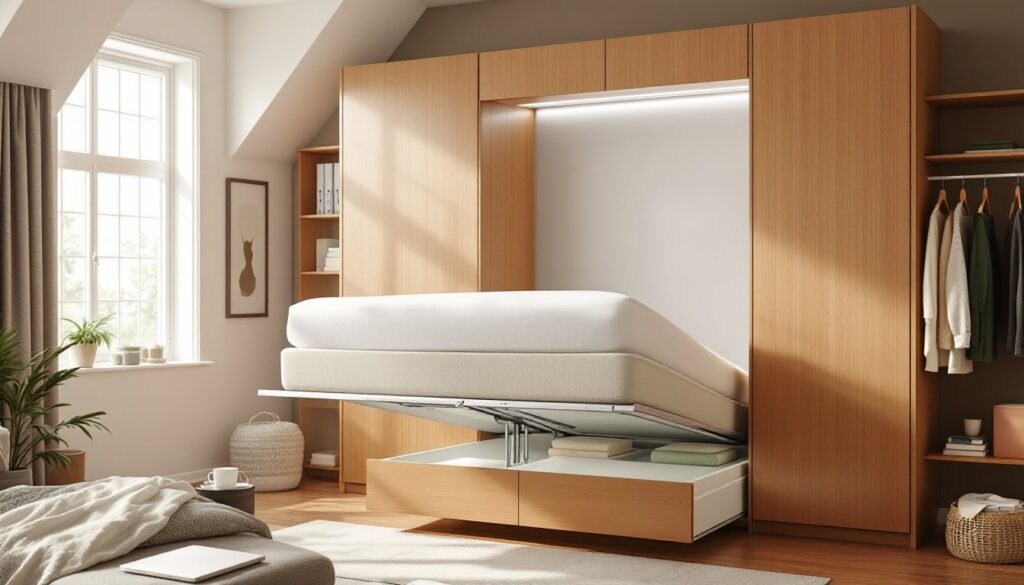
A storage murphy bed (also called a wall bed) is a mattress attached to a pivoting frame that lifts into a cabinet or wall recess when not in use. The storage component comes from built-in shelving, drawers, or cubbies integrated into the surrounding cabinetry. Unlike basic murphy beds that simply fold up, storage models use the vertical or horizontal cabinet structure to house books, clothing, office supplies, or decorative items, essentially turning a bedroom wall into a functional closet or entertainment center during the day.
The mechanics rely on a counterbalance system: either piston lifts (gas springs similar to car hatchback struts) or coil springs housed in the side frame rails. These mechanisms offset the mattress weight, allowing one person to raise and lower a queen-size bed with minimal effort. Quality units include a locking latch or strap system to secure the bed upright and prevent accidental deployment.
Most storage murphy beds come as modular kits with pre-drilled panels and hardware. The cabinet frame anchors to wall studs, critical for safety, since a queen bed assembly can weigh 200–300 pounds fully loaded. Mounting to drywall alone is never sufficient: you’ll need to locate at least two 16-inch on-center studs and use lag bolts or heavy-duty toggle anchors rated for the load. Building codes don’t specifically regulate murphy beds, but the same principles that govern heavy cabinetry and shelving apply: secure attachment points and appropriate fastener grades.
Key Benefits of Storage Murphy Beds for Your Home
The primary advantage is reclaiming daytime floor space. A folded murphy bed frees up 20–30 square feet in a typical bedroom, enough room for a yoga mat, desk setup, or play area. In a studio apartment, that shift from bedroom to living room happens in under a minute without hauling furniture or flipping cushions.
Dual-function rooms become genuinely usable. A home office can host overnight guests without keeping a daybed that eats into desk space. A craft room doubles as a guest suite. A teenager’s bedroom gains study space without sacrificing a full-size mattress. The built-in storage shelves replace standalone bookcases or dressers, consolidating furniture and reducing visual clutter.
From a design standpoint, storage murphy beds offer a cleaner aesthetic than sofa beds or futons. The cabinetry can match existing trim and finish, blending into the room rather than announcing itself as temporary sleeping quarters. Many units include LED accent lighting, fold-down desks, or charging stations, turning the wall unit into a true command center.
Finally, there’s a cost-per-function argument. A quality storage murphy bed system runs $1,500–$4,000 installed, comparable to a decent sofa bed plus a bookshelf and dresser. The difference is longevity, piston-lift mechanisms are rated for thousands of cycles, and the mattress stays flat and supported rather than folding into a metal bar sandwich. You’re also investing in your home’s usable square footage, which can translate to higher resale appeal in markets where space is premium.
Types of Storage Murphy Beds: Finding the Right Fit
Vertical vs. Horizontal Murphy Beds
Vertical murphy beds fold headboard-up and are the traditional configuration. They work best in rooms with at least 8-foot ceilings and wall widths of 64 inches (for a twin) to 94 inches (for a queen). The vertical orientation leaves more wall space on either side for flanking storage towers, tall cabinets that can hold clothing, linens, or office files. This setup is ideal for narrow rooms where you want maximum floor clearance when the bed is stowed.
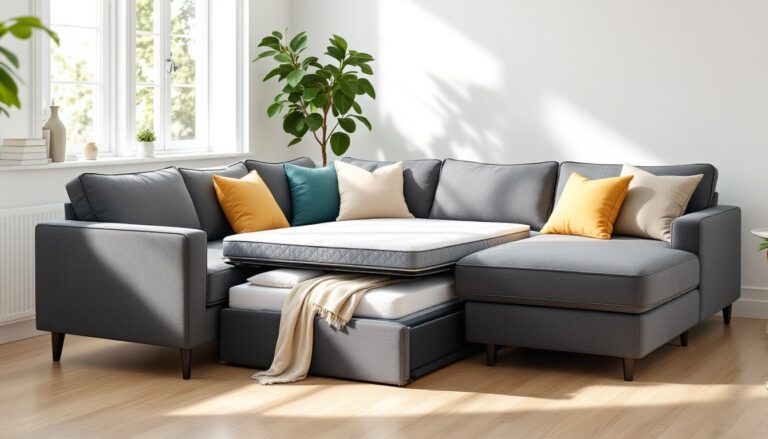
Horizontal (sideways) murphy beds pivot lengthwise and suit rooms with limited ceiling height or wider wall spans. A queen bed in horizontal orientation needs roughly 100 inches of wall width but only clears about 60 inches of floor depth when deployed. These work well in basements with lower ceilings or in rooms where you want overhead storage cabinets above the folded bed. Horizontal models often incorporate a fold-down desk or sofa in front of the bed cabinet, creating a compact workstation or seating area.
From a small-space planning perspective, vertical beds tend to feel less imposing in tighter quarters, while horizontal beds can anchor a wider wall and create symmetry in open-plan layouts.
Built-In Storage Features to Consider
Storage options vary widely depending on the cabinet design:
- Flanking towers: Vertical cabinets on one or both sides of the bed frame, usually 18–24 inches deep. Can include adjustable shelves, hanging rods, or pull-out drawers. Great for replacing a dresser or closet.
- Overhead cabinets: Cubbies or closed cabinets above the folded bed. Best for items you don’t need daily, extra bedding, seasonal decor, or archive boxes.
- Integrated desks: Fold-down or slide-out work surfaces mounted to the cabinet or bed frame. Some models let the desk stay in place when the bed deploys: others require clearing the surface first.
- Sofa/shelf combos: A fixed bench or sofa sits in front of the bed cabinet, with storage drawers underneath the seat or open shelving in the sofa back.
When evaluating storage features, measure what you plan to store. A standard dresser drawer is about 14 inches deep: if your murphy bed cabinet is only 16 inches deep when closed, you won’t fit bulky folded sweaters. Similarly, overhead cabinets should sit at a reachable height, 60–70 inches from the floor, unless you’re comfortable using a step stool.
How to Choose the Best Storage Murphy Bed for Your Space
Start by measuring your room’s footprint and clearances. When deployed, a queen murphy bed extends about 80–85 inches from the wall (mattress length plus frame depth). Add another 24–36 inches of standing/walking space in front of the bed. That means you need a minimum room depth of roughly 110 inches (just over 9 feet) to comfortably operate a queen vertical murphy bed. For a twin or full, reduce accordingly.
Check your ceiling height and wall width. Vertical beds require clearance equal to the bed width plus the cabinet frame, plan for at least 100 inches of clear wall for a queen with storage towers. Horizontal beds need wall width equal to the bed length (80+ inches for a queen) plus cabinet trim. Measure from corner to corner, accounting for baseboards, light switches, and outlets. You can’t mount a murphy bed over an electrical box without relocating it.
Mattress compatibility matters. Most murphy bed frames accept mattresses up to 12 inches thick: memory foam or hybrid mattresses in the 10–12-inch range work well because they’re lighter than traditional innerspring models. Avoid pillow-tops that exceed the frame’s depth rating, the bed won’t close properly. Some manufacturers sell proprietary mattresses designed for their lift mechanisms, but aftermarket options are usually fine if you stay within the weight and thickness specs.
Consider the finish and material quality. Laminate or engineered wood keeps costs down and offers decent durability for moderate use. Solid hardwood or high-grade plywood with veneer costs more but handles daily cycles and heavier loads better. If you’re building a unit from scratch using plans from sites like Ana White, budget for cabinet-grade plywood (at least ¾-inch thickness) and quality hardware, cheap hinges or drawer slides will fail quickly under repeated use.
Finally, plan for the mattress. A queen memory foam mattress runs $400–$800 depending on brand and features. Factor that into your total budget if the murphy bed kit doesn’t include one. Some people repurpose an existing mattress, which works as long as it meets the weight and thickness requirements and hasn’t sagged or developed permanent compression grooves.
Installation Options: DIY vs. Professional Setup
DIY installation is feasible for homeowners comfortable with power tools and basic carpentry. Most kits include detailed instructions, pre-drilled panels, and all necessary hardware. You’ll need:
- Stud finder and level (a 4-foot or 6-foot level is ideal for aligning tall cabinets)
- Drill/driver with bits for pilot holes and lag bolts
- Socket wrench or impact driver for heavy fasteners
- Circular saw or miter saw if you need to trim panels or add custom trim
- Second pair of hands, lifting and securing a 200-pound cabinet solo is unsafe and nearly impossible
Plan for 6–10 hours of work for a full queen storage murphy bed with flanking towers. The process involves assembling the cabinet frame, mounting it to the wall (lag bolts into studs are non-negotiable), installing the lift mechanism, attaching the bed platform, and adding doors, shelves, and hardware. If you’ve built flat-pack furniture or installed wall-mounted cabinets before, this is a step up in complexity but not radically different.
Safety warning: Always wear safety glasses when drilling overhead or into wall studs. Use gloves when handling metal hardware or sheet goods with sharp edges. If you’re cutting panels, ear protection and a dust mask are essential.
Mistakes to avoid: skipping the stud finder and guessing at mounting points (drywall anchors will eventually fail), over-tightening fasteners and cracking particleboard panels, and failing to check for level and plumb during assembly. A cabinet that’s even slightly out of square will bind when you try to raise and lower the bed. Many workshop-focused tutorials emphasize squaring the frame before final attachment, use clamps and diagonal measurements to confirm.
Professional installation costs $300–$800 depending on the unit’s complexity and regional labor rates. Pros bring the tools, experience, and liability insurance. They’ll locate studs, ensure the cabinet is level and secure, and test the lift mechanism before they leave. If your walls are plaster, metal studs, or brick, professional help is worth the investment, anchoring to those substrates requires specialized fasteners and techniques. Similarly, if the installation involves relocating electrical outlets or running in-wall LED lighting, hire a licensed electrician to handle that portion.
Some municipalities require a building permit for structural modifications or electrical work, though a simple murphy bed install typically doesn’t trigger permit requirements unless you’re opening walls or altering framing. Check with your local building department if you’re uncertain. If you’re in a rental, get written landlord approval before mounting anything that substantial to the wall.