Books have a way of multiplying faster than dust bunnies. One month you’ve got a neat stack on your nightstand, the next you’re playing floor-to-ceiling Jenga with paperbacks. Whether you’re drowning in cookbooks or managing a fantasy collection that rivals a small library, proper book storage isn’t just about keeping things tidy, it’s about protecting your collection and reclaiming usable square footage. From traditional built-ins to clever space-saving hacks, the right storage approach depends on your space, budget, and how many volumes you’re actually dealing with. Here are ten practical solutions that work for real homes, not just magazine spreads.
Table of Contents
ToggleKey Takeaways
- Proper book storage solutions protect your collection from moisture, mold, and pest damage while extending the lifespan of your books.
- Loaded bookshelves weigh 15–25 pounds per linear foot, so mount shelves securely into wall studs with appropriate anchors or L-brackets to prevent sagging and safety hazards.
- Vertical storage options like floating shelves, wall-mounted units, and ladder bookcases maximize space in small homes without consuming valuable floor area.
- Built-in shelving adds character and resale value to homes while offering unmatched capacity compared to freestanding bookcases.
- Leave 15–20% empty shelf space for growth, breathing room, and improved air circulation to reduce moisture and dust buildup on your books.
- Organize your collection by genre, author, or size rather than color alone, as a logical system makes your books accessible and easier to maintain long-term.
Why Proper Book Storage Matters for Your Home
Books aren’t indestructible. Stacking them on the floor or cramming them into damp corners shortens their lifespan and invites mold, warping, and pest damage. Paper is hygroscopic, it absorbs moisture from the air, so storing books in basements or uninsulated garages without climate control is asking for trouble.
Proper shelving also protects wall integrity. A linear foot of fully loaded books weighs 15–25 pounds, depending on whether they’re paperbacks or hardcovers. Mount shelves into wall studs using appropriate anchors, or risk a midnight avalanche. For anything deeper than 10 inches or longer than 36 inches unsupported, consider L-brackets or a vertical support to prevent sagging.
Beyond preservation, organized book storage makes your collection accessible. Hunting for a specific title across multiple rooms wastes time. A deliberate system, whether by genre, author, or color (yes, it’s polarizing, but it works for some), turns chaos into function. And if you’re planning to sell your home, built-in shelving is a value-add that appeals to buyers looking for character and storage capacity.
Traditional Bookshelf Solutions That Never Go Out of Style
Freestanding bookcases remain the workhorse of home libraries. Look for units made from solid wood or veneer-covered plywood, particle board sags under load and doesn’t hold fasteners well if you need to reposition shelves. Standard shelf depth is 10–12 inches, which accommodates most books without wasting floor space.
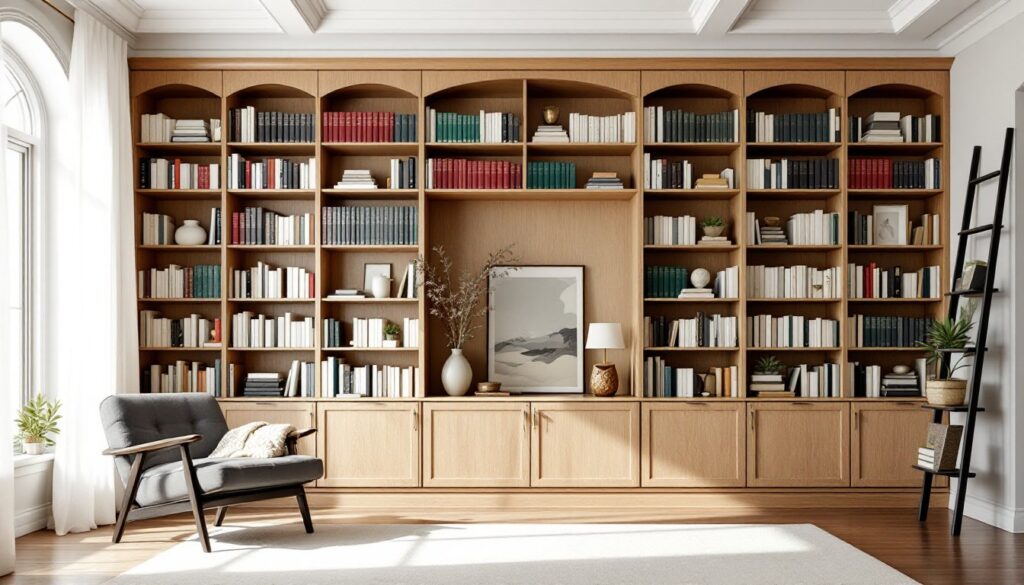
For serious collections, built-in shelving offers unmatched capacity and a custom look. Framing them between studs (typically spaced 16 inches on center) creates recessed alcoves that don’t eat into room dimensions. Use ¾-inch plywood or solid lumber for shelves: anything thinner will bow under weight. If you’re tackling this as a DIY project, a miter saw will give you cleaner cuts than a circular saw for the face trim.
Built-ins do raise permitting questions in some jurisdictions if you’re modifying load-bearing walls, so check local codes before breaking out the reciprocating saw. Most cosmetic built-ins between existing studs don’t require permits, but adding or removing studs likely will.
Ladder-style bookcases lean against the wall at an angle, offering a smaller footprint than traditional cases. They work well in narrow hallways or bedrooms but sacrifice some capacity. Because they rely on wall contact for stability, use furniture anchors to prevent tipping, especially critical in homes with kids or pets. When arranging books properly, many homeowners find that combining traditional shelves with creative approaches works best.
Creative DIY Book Storage Ideas for Small Spaces
Tight quarters demand resourcefulness. Small-space book storage isn’t about cramming more onto less, it’s about going vertical, hidden, or dual-purpose.
Floating Shelves and Wall-Mounted Options
Floating shelves eliminate the visual clutter of brackets and uprights, making rooms feel larger. Install them with heavy-duty floating shelf brackets that slide into a routed groove or mount directly to studs. For a 36-inch shelf holding books, use at least two brackets rated for 50+ pounds each.
Space shelves 10–12 inches apart vertically for standard hardcovers, or 8 inches for paperbacks. Running them floor to ceiling in a narrow niche (like beside a chimney or in a closet) maximizes dead space. Paint them the same color as the wall to make them visually recede, or use contrasting stain for a statement piece.
Corner shelves are another underused option. Right-angle designs or zigzag configurations turn awkward corners into functional storage. They won’t hold your entire library, but they’re perfect for a rotating “currently reading” display.
Always wear safety goggles when drilling into walls, brick dust or drywall particulate isn’t something you want in your eyes. A stud finder is non-negotiable unless you enjoy patching drywall.
Repurposed Furniture as Book Storage
Old furniture beats new particleboard every time. Vintage dressers with drawers removed become open cubbies: line the drawer cavities with ¾-inch plywood if the bottoms are flimsy. Sand and prime before painting to ensure paint adhesion, especially on glossy old finishes.
Wooden crates or wine boxes stacked and screwed together form modular units. Secure them to each other with wood screws (1¼-inch works for most softwood crates), and anchor the whole stack to the wall. Left raw, they’ve got an industrial vibe: stained or painted, they clean up nicely.
Ladders, the actual kind, make quirky leaning shelves. An old wooden step ladder opened partially and stabilized against a wall holds books on each tread. It’s not high-capacity, but it’s a conversation starter. For design inspiration on maximizing tight areas, small-space storage tactics often highlight vertical and multi-use furniture.
Bench seating with lift-top storage hides books in plain sight. Build a simple frame from 2×4 lumber, add a plywood top on piano hinges, and upholster or paint to match your space. It doubles as seating and keeps dust off lesser-used volumes. This approach mirrors tactics used in organizing compact living areas effectively.
Innovative Modern Book Storage Designs
Modern designs leverage materials and layouts that wouldn’t fly in a Victorian parlor but work beautifully in contemporary spaces.
Modular shelving systems (think cube-based units) allow reconfiguration as your collection grows. Many use cam-lock or dowel construction, so assembly is straightforward but not always sturdy long-term. Reinforce joints with wood glue during assembly if you’re not planning to move them often.
Metal and glass shelving offers an industrial or minimalist aesthetic. Powder-coated steel brackets resist rust and support significant weight. Tempered glass shelves look sleek but check the weight rating, most max out around 30–40 pounds per shelf. They’re better suited for art books and display than dense reference volumes.
Invisible shelving uses L-brackets concealed within the bottom book’s cover, making it appear the stack floats. It’s a neat trick for small groupings but impractical for large collections. Each bracket typically holds 10–15 pounds, so stick to lighter books.
Room dividers with open shelving partition spaces without blocking light. A floor-to-ceiling unit between a living area and home office adds privacy and storage. Make sure it’s anchored, freestanding units over six feet tall are tip hazards. Use L-brackets secured to floor joists or wall studs for stability. Many ideas around maximizing vertical space apply here as well.
Some modern units incorporate LED strip lighting on shelves. It’s a nice touch for highlighting covers, but plan your wiring before installation. Low-voltage LED tape is DIY-friendly and doesn’t generate enough heat to damage books, unlike older incandescent puck lights.
Organizing Your Book Collection by Style and Category
Storage is only half the equation, organization determines whether your system actually works day-to-day.
By genre or subject is the library standard for good reason. Fiction separate from nonfiction, then subdivide: mystery, sci-fi, biography, cookbooks, etc. It’s intuitive and makes recommendations easy when guests ask for a thriller.
By author works well for readers loyal to specific writers. Alphabetize by last name within each genre to speed up searches. For large collections, consider printable shelf labels or a simple spreadsheet if you loan books frequently.
By size is pragmatic, not precious. Tall art books and oversized atlases don’t fit on standard shelves, so grouping them separately (often on bottom shelves or stored flat) prevents wasted vertical space and avoids the leaning tower of awkwardly-stacked volumes. Additional home organization methods, especially for managing smaller items, can inform your approach to categorizing varied book sizes.
Color-coding is divisive. It photographs beautifully and creates visual calm through repetition, but it’s useless if you don’t remember whether that thriller had a red or black spine. It works best for people with smaller collections or those who prioritize aesthetics over strict function.
Whatever system you choose, leave 15–20% empty shelf space for growth. A packed-tight shelf is impossible to browse, and pulling books out risks damaging spines. That breathing room also improves air circulation, reducing moisture and dust buildup.
For homes with significant collections, treating books with the same spatial planning applied to basement organization systems ensures long-term accessibility. Dust shelves and books every few months with a microfiber cloth, never use furniture polish directly on books. For leather-bound or antique volumes, consider a dehumidifier if you live in a humid climate: keeping relative humidity between 30–50% prevents mold without drying out bindings. Professional book collectors often reference expert bookshelf organization ideas when curating their displays.
Finally, if your collection outgrows your home, be honest about whether you’ll reread everything. Donate duplicates or books you’ve outgrown, your local library, school, or literacy nonprofit will appreciate them. For households managing diverse storage needs, the principles behind warehouse-style organization can sometimes scale down to home use. A curated collection you actually use beats a hoard you’re just maintaining.