Most laundry rooms weren’t designed for storage, they were squeezed into leftover space after the rest of the house was mapped out. The result? A cramped jumble of detergent bottles, stray socks, and a steadily growing pile of items that don’t have a home anywhere else. But it doesn’t have to be that way. With the right storage strategies, even a closet-sized laundry room can become a functional, organized workspace that actually makes wash day easier. Whether you’re working with a full room or a tight nook, these solutions will help reclaim every usable inch.
Table of Contents
ToggleKey Takeaways
- Smart laundry room storage solutions transform cramped spaces into functional, organized areas by using vertical storage, rolling carts, and strategic shelving that keep supplies accessible and prevent duplicate purchases.
- Wall-mounted shelves, cabinets, and over-the-door organizers maximize vertical space in tight laundry rooms without consuming valuable floor area needed for work zones.
- Hidden storage options like pull-out shelves, gap organizers, and freestanding linen towers keep supplies concealed while maintaining easy access to detergent, cleaning products, and laundry essentials.
- Rolling carts with locking casters provide flexible, renter-friendly storage that adapts to changing needs and can handle sorting, folding, seasonal rotation, or cleaning supplies without permanent installation.
- DIY storage projects like floating shelves with hanging rods, pegboard organizers, and built-in hamper cabinets deliver custom solutions for $20–$50 and require only basic carpentry skills.
- Labeling bins and baskets with a label maker prevents confusion and keeps household members organized, ensuring everything has a designated place and reducing clutter accumulation.
Why Smart Storage Transforms Your Laundry Room
A laundry room without storage is just a place to swap wet clothes for dry ones. Adding intentional storage turns it into a multipurpose zone where you can sort, fold, pretreat stains, store cleaning supplies, and even stash seasonal gear.
Efficiency improves when everything has a place. No more digging through cluttered shelves or making trips to other rooms for supplies. Sorting laundry becomes faster when hampers are built in or stacked. Folding is easier with a clear counter. And if you’re lucky enough to have room for a utility sink, organized storage keeps scrub brushes, stain removers, and rags within reach.
Good storage also prevents wasted product and money. When detergent, dryer sheets, and stain sticks are visible and accessible, you won’t accidentally buy duplicates or let items expire. Clear bins, labeled baskets, and tiered shelving make inventory checks quick.
Finally, smart storage extends the room’s usefulness. Many homeowners use laundry areas for pet supplies, shoes, sports equipment, or bulk pantry overflow. With the right shelving and containers, the same space handles multiple needs without feeling chaotic.
Vertical Storage Options That Save Floor Space
In tight laundry rooms, floor space is premium real estate. The solution is to build up, not out. Vertical storage keeps essentials accessible without crowding the work zone.
Wall-Mounted Shelves and Cabinets
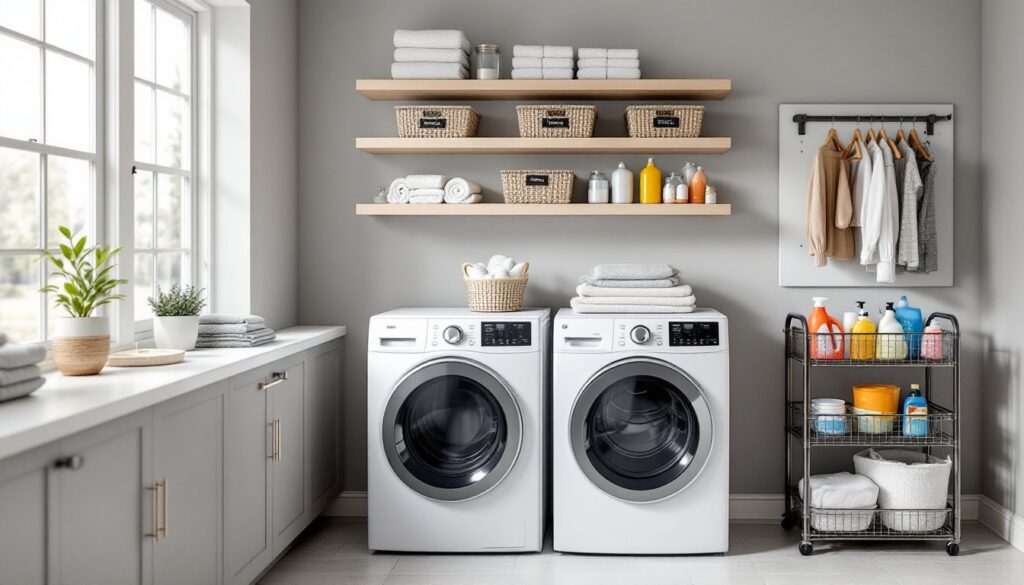
Open shelves are the easiest vertical add. Install them above the washer and dryer using L-brackets rated for at least 50 pounds if you’re storing heavy detergent jugs or bulk supplies. Standard shelf depth is 12 inches for laundry products: go deeper (16 inches) if you need room for storage bins.
Metal wire shelving is affordable and resists moisture, but wood or laminate looks cleaner. If you choose wood, seal it with polyurethane to protect against humidity. Mount shelves into studs (typically spaced 16 inches on center) using 3-inch wood screws for a solid hold. If studs aren’t where you need them, use toggle bolts rated for drywall.
Closed cabinets keep clutter out of sight and protect supplies from dust. Stock cabinets from home centers come in standard widths (12, 18, 24, 30, 36 inches), making it easier to fit odd spaces. Wall-mounted cabinets should be installed at a comfortable height, 12 to 18 inches above the washer or countertop is typical. For spaces lacking stylish storage solutions, custom-built cabinets or repurposed kitchen uppers work well.
Consider adjustable shelving inside cabinets to accommodate tall bottles or short canisters. Shelf pins let you move shelves up or down as needs change.
Over-the-Door Organizers and Hooks
Doors are wasted vertical space in most laundry rooms. An over-the-door rack adds instant storage without drilling holes. Look for models with five to six pockets or baskets: they’re ideal for dryer sheets, clothespins, and cleaning rags. Choose metal or heavy-duty plastic over flimsy fabric, these organizers take daily abuse.
Hooks are another simple fix. Install a row of heavy-duty hooks (rated for 10 to 20 pounds each) on the back of the door or along an empty wall. Use them for hanging mesh laundry bags, aprons, or reusable shopping bags. Flip-down drying racks that mount to the wall or door are perfect for air-drying delicates without taking up floor space.
Hidden Storage Solutions for a Cleaner Look
Not everyone wants their laundry supplies on display. Hidden storage keeps the room tidy and makes it easier to incorporate the space into an open floor plan or shared mudroom.
Pull-out shelves and drawer inserts fit inside base cabinets and make it easy to access items at the back without kneeling or digging. Cabinet pull-outs are available in widths from 9 to 24 inches and install on full-extension ball-bearing slides. They’re worth it if you store heavy jugs or multiple products.
Between-washer storage is often overlooked. The gap between a washer and dryer (or between appliances and a wall) is usually 3 to 6 inches, just enough for a slim rolling cart. These carts, sometimes called laundry gap organizers, slide into tight spaces and hold detergent, fabric softener, and stain removers. Look for models with three or four tiers and wheels that lock.
If you’re installing new cabinets, toe-kick drawers add hidden storage at floor level. These shallow drawers fit into the recessed space below base cabinets (typically 4 inches tall) and are perfect for flat items like dryer sheets or cleaning cloths. They require undermount drawer slides and a bit more carpentry skill, but they maximize every inch.
For renters or those avoiding permanent changes, freestanding cabinets with doors keep supplies concealed. Slim linen towers (12 to 18 inches wide) fit next to appliances and provide enclosed shelving. Many designs resemble furniture more than utility storage, which helps if the laundry area is visible from living spaces. Homeowners tackling basement storage solutions can apply the same principles to multipurpose areas.
Rolling Carts and Mobile Storage for Flexibility
Fixed storage works for everyday supplies, but rolling carts handle the overflow and adapt as needs change. They’re especially useful in laundry rooms that double as craft zones, pet stations, or utility closets.
Look for carts with three or four shelves and a footprint around 12 by 18 inches. Metal carts hold up better than plastic in humid environments. Locking casters are a must, without them, the cart rolls away every time you grab something.
Use rolling carts for:
- Sorting laundry by color or type before wash day
- Folding station supplies like hangers, clothespins, and stain pens
- Seasonal gear that rotates in and out (beach towels, winter scarves)
- Cleaning caddy with sprays, brushes, and microfiber cloths
Some carts include removable bins or baskets, which makes it easy to carry supplies to other rooms. If you’re short on counter space, a cart with a flat top serves as a mobile work surface.
Utility carts on wheels are also handy for moving heavy detergent bottles or bulk paper towels from storage to the laundry area. Choose a cart rated for at least 50 pounds if you’re hauling gallon jugs or stacked supplies. Insights from Apartment Therapy often highlight rolling storage as a renter-friendly solution that doesn’t require wall anchors or permanent installation.
DIY Storage Projects You Can Tackle This Weekend
If ready-made storage doesn’t fit your space or budget, a few simple DIY projects can deliver custom solutions without advanced carpentry skills.
Floating shelf with a hanging rod combines storage and drying in one build. Cut a 1×12 board to the desired length (a 6-foot span works above most washers). Mount it to studs with heavy-duty L-brackets rated for 75 pounds or more. Below the shelf, install a closet rod using rod brackets. Use the shelf for detergent and the rod for hanging shirts straight from the dryer. Total cost: around $30 to $50 in materials. Finish with paint or stain to match your room.
Pegboard wall organizer is endlessly customizable. Cut a 4×8-foot pegboard panel (available at home centers for under $20) to fit your wall space. Mount it using 1×2 furring strips as spacers so hooks have room to fit. Pegboard hooks, baskets, and shelves let you rearrange storage as needs change. This setup works great for brooms, spray bottles, and small bins. Paint the pegboard to match your walls or go bold with a contrasting color.
Ladder shelf adds rustic charm and costs almost nothing if you have an old wooden ladder. Sand it down, apply a coat of exterior primer followed by satin or semi-gloss paint, and lean it against the wall. Use the rungs to hang baskets or drape drying items. If stability is a concern, anchor the top to a stud with a small L-bracket.
Built-in hamper cabinet hides dirty laundry and keeps it off the floor. Build a simple frame from 2×2 lumber sized to hold a laundry basket (24 inches wide by 18 inches deep is common). Add a hinged lid or tilt-out door. If you’re handy with a saw and drill, this project takes a few hours. For a cleaner look, face the frame with 1/2-inch plywood and paint it to match existing cabinetry. Many IKEA laundry room ideas feature clever hamper hacks using stock cabinets and bins.
Magnetic strip for small metal items keeps scissors, tweezers, and safety pins handy. Mount a 12 to 18-inch magnetic knife strip on the inside of a cabinet door or along a side wall. It’s a small detail, but it clears counter clutter fast. These strips cost around $10 to $15 and install with screws or heavy-duty adhesive.
Safety note: Always wear safety glasses when cutting wood or drilling into walls. Use a stud finder before mounting heavy shelves or rods to avoid drywall failures. If you’re working with power tools, ear protection and a dust mask are recommended, especially in enclosed spaces.
For those managing tight quarters, similar principles from small apartment storage apply, vertical builds, modular units, and dual-purpose furniture make the most of limited square footage. And if you’re organizing beyond the laundry room, strategies from kitchen corner cabinets can inspire creative use of awkward angles and deep spaces.
Pro tip from Martha Stewart: Label bins and baskets with a label maker or chalkboard tags. It’s a small step that keeps everyone in the household on the same page and prevents the dreaded “where does this go?” pile-up.