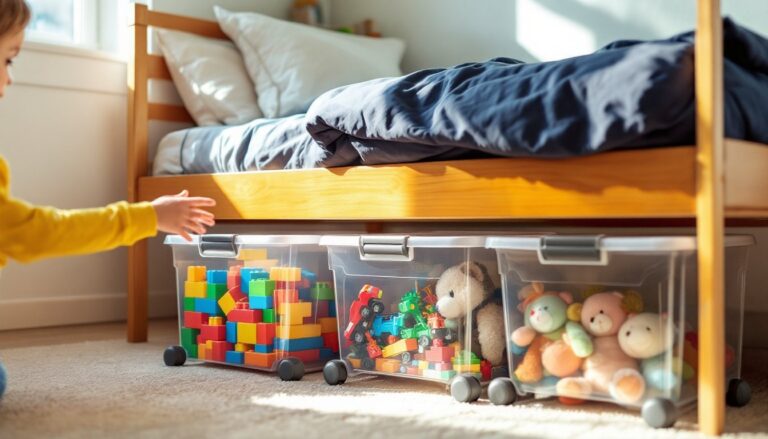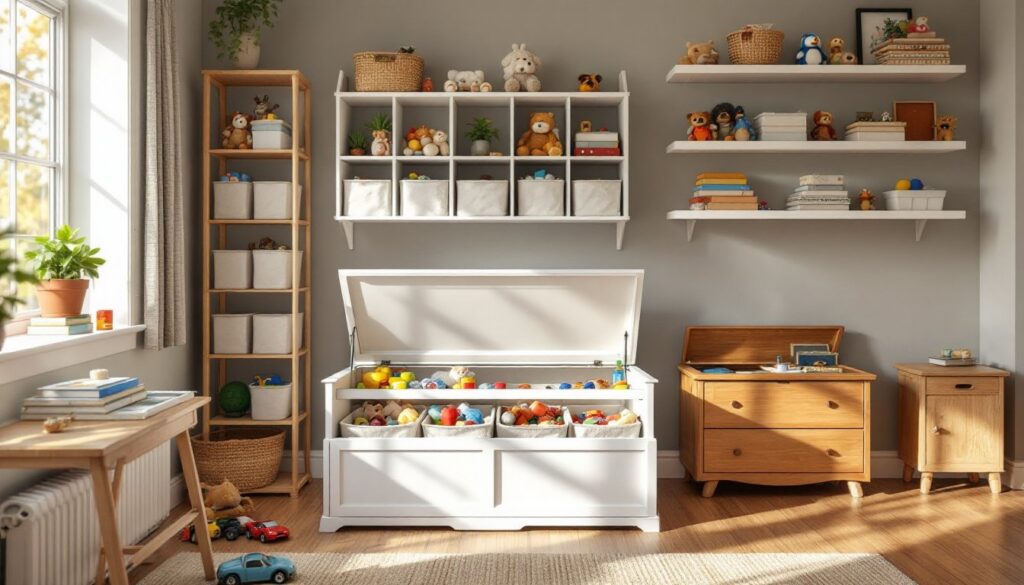
Toys have a habit of multiplying faster than anyone can explain, and before long, every room becomes a landmine of action figures, puzzle pieces, and random blocks. The right kids furniture with built-in toy storage can change that, not through magical intervention, but through smart design that makes cleanup easier for everyone.
The best toy storage solutions do more than hide clutter. They combine function with furniture pieces kids actually use, turning benches, shelves, and trunks into dual-purpose workhorses. This guide covers practical furniture options that fit real homes, plus DIY ideas for those who prefer to build their own. No fluff, just the stuff that works.
Table of Contents
ToggleKey Takeaways
- Multi-functional toy storage solutions—including benches, ottomans, and cube organizers—reduce clutter while serving dual purposes in kids’ furniture layouts, saving space in homes where square footage matters.
- Built-in storage furniture encourages children to clean up more consistently because storage integrated into daily-use pieces beats isolated bins tucked away in corners.
- Invest in quality materials like solid wood, reinforced fabric bins, and proper hardware (safety hinges, wall anchors, and metal brackets) to ensure toy storage furniture withstands years of use without damage.
- Open shelving and visible storage systems work better than closed cabinets because kids are more likely to use toys they can actually see, making organization more effective.
- DIY toy storage projects like simple benches or rolling carts are achievable with basic tools and free plans from resources like Ana White, typically requiring 2-4 hours of assembly time.
- Choose toy storage solutions based on your room dimensions and toy types—measure twice, prioritize vertical storage for small spaces, and select neutral finishes that will last through kids’ changing interests over time.
Why Kids Furniture with Built-In Storage Is a Game-Changer
Traditional toy boxes stack clutter vertically, but furniture with integrated storage spreads it horizontally across functional surfaces. A storage bench gives kids a place to sit while putting on shoes, and the compartment underneath holds their scattered belongings. An ottoman does the same while doubling as a footrest or extra seating when friends visit.
The real advantage? Furniture that serves two purposes earns its footprint. In homes where square footage matters, a bookshelf that stores toys takes up the same space as one that doesn’t, but only the former keeps the floor clear. Kids are also more likely to put things away when storage is part of the furniture they interact with daily, rather than a bin shoved in the corner.
Beyond practicality, built-in storage furniture teaches spatial organization. Cube organizers with fabric bins let kids see categories at a glance (stuffed animals here, building toys there), which builds habits that stick. When cleanup doesn’t require hauling a heavy toy box across the room, resistance drops. That’s not theory, that’s physics and human nature working together.
One more thing: furniture-grade materials hold up better than flimsy plastic bins. A well-built storage trunk made from 3/4-inch plywood or solid pine can handle years of use and still look good. Cheaper alternatives crack, warp, or lose their lids within months. If the goal is long-term organization, the furniture approach wins.
Multi-Functional Toy Storage Furniture for Every Room
Not all storage furniture belongs in the playroom. The best pieces integrate into living rooms, bedrooms, and entryways without screaming “kids live here.” Here’s what actually works in different spaces.
Storage Benches and Ottomans
Storage benches fit naturally at the foot of a bed, under a window, or along an entryway wall. Look for models with lift-top lids (easier for kids than pull-out drawers) and soft-close hinges to prevent pinched fingers. A bench built from 1×12 pine boards with a cushioned top can hold everything from board games to dress-up clothes while providing seating.
Ottomans work in tighter spaces. A 24-inch square ottoman with a removable top stores art supplies or small toys without dominating a room. Families working with stylish storage solutions for small spaces often choose ottomans because they blend into existing decor, upholstered fabric or faux leather matches living room furniture better than primary-colored plastic.
One safety note: any storage bench or ottoman with a lid needs a lid-support hinge (also called a safety hinge) to prevent it from slamming shut. These cost $5–10 per pair and install with basic wood screws. Skip this, and you’re asking for a trip to urgent care.
Toy Chests and Trunks
Toy chests get a bad rap for being “toy jails” where everything gets dumped, but modern designs fix that problem. Look for chests with divided compartments or removable fabric bins inside the main cavity. A 36-inch-wide trunk with three separate sections keeps toys sorted without requiring a second piece of furniture.
For those tackling LEGO storage challenges, a trunk with a flip-top lid and shallow depth (12–14 inches) works better than a deep chest. Kids can see what’s inside without excavating, and smaller bricks don’t get buried under heavier toys.
Construction matters here. Solid wood trunks (pine, oak, or birch) last decades. Particleboard or MDF versions with laminate finishes hold up for a few years but eventually chip or swell if exposed to moisture. If budget allows, dovetail joints and corner bracing add structural integrity. If building from scratch, use 1×10 or 1×12 boards for the sides and 1/2-inch plywood for the bottom panel. Reinforce corners with metal L-brackets on the inside.
Open Shelving Units and Cube Organizers
Open shelves beat closed cabinets for kids’ rooms because visibility drives use. If a kid can’t see a toy, it doesn’t exist. Cube organizers, those grid-style shelving units with square openings, pair perfectly with fabric or plastic bins for quick sorting.
Standard cube organizers come in 11-inch, 13-inch, or 15-inch cube sizes. The 13-inch version is the sweet spot: large enough for most toys, small enough that bins don’t become black holes. Look for units made from laminated particleboard (budget-friendly) or solid wood (more durable). Wall-anchor these units, always. A filled 6-cube organizer weighs 60+ pounds and tips easily if a kid climbs it. Use heavy-duty wall anchors (toggle bolts or masonry anchors, depending on wall type) and secure the unit at two points near the top.
Fabric bins come in every color, but not all are equal. Canvas bins with reinforced handles hold their shape better than felt or non-woven polypropylene. If bins will hold heavy items (blocks, toy cars), look for double-stitched seams and a cardboard or plastic base insert.
For families managing overflow in other areas, basement storage solutions often use the same cube organizer principles, modular, stackable, and adaptable. The same 13-inch cube that holds stuffed animals in a bedroom can store craft supplies or sports gear downstairs.
Floating shelves work for lighter items, books, small figurines, or art supplies. Install them 24–30 inches apart vertically so kids can reach at least the bottom two rows. Use 8-inch or 10-inch-deep shelves to prevent toys from falling off. Keyhole brackets or floating shelf hardware rated for at least 20 pounds per linear foot keeps things secure. Always find studs when mounting: drywall anchors alone won’t support a shelf full of hardcover books or wooden toys.
DIY Toy Storage Solutions Using Kids Furniture
Building toy storage furniture isn’t complicated, especially if you’re working from existing plans. Free resources like Ana White and The Handyman’s Daughter provide detailed cut lists, material breakdowns, and step-by-step tutorials for beginners.
A basic storage bench requires:
- Two 1×12 pine boards (cut to 36 inches for the sides)
- One 1×12 pine board (cut to 34.5 inches for the front)
- One 1×12 pine board (cut to 34.5 inches for the back)
- One piece of 3/4-inch plywood (cut to 12 x 36 inches for the bottom)
- One piece of 3/4-inch plywood (cut to 13.5 x 37.5 inches for the lid)
- Two piano hinges or lid-support hinges
- Wood glue, 1.25-inch brad nails, and 1.5-inch wood screws
Assembly takes about two hours. Use wood glue and brad nails to attach the sides to the front and back, then screw the bottom panel in from underneath with 1.5-inch wood screws every 6 inches. Attach the lid with hinges, ensuring the hardware is centered to prevent warping. Sand all edges with 120-grit sandpaper, then finish with primer and semi-gloss paint or water-based polyurethane for a natural wood look.
For a more advanced project, try a rolling toy cart using 2×2 lumber for the frame and 1/2-inch plywood for the shelves. Add 3-inch swivel casters (at least two with locks) to the bottom so kids can move toys between rooms. A project like this appears in many variations on IKEA Hackers, where builders modify STUVA or BESTÅ components into custom configurations.
Tool-wise, a circular saw or miter saw, drill/driver, tape measure, and carpenter’s square cover most builds. A Kreg Jig makes pocket-hole joinery easier for drawer boxes or face frames, but it’s optional. Wear safety glasses and a dust mask when cutting, and use hearing protection if running a saw for extended periods. DIY furniture saves money, but not if you skip PPE and end up in the ER.
Choosing the Right Toy Storage Furniture for Your Space
Selecting furniture starts with measuring the room, not estimating, measuring. A 25-foot tape measure and a notepad prevent the “I thought it would fit” problem. Record floor dimensions, ceiling height, and door swing clearance. A 30-inch-wide storage bench might fit along a wall, but if it blocks the door from opening fully, it’s useless.
Consider traffic flow. Kids don’t walk around furniture: they plow through it. Leave at least 24 inches of clearance in walkways and 36 inches in play zones where they’ll sit or move around. Furniture placed directly in front of a closet or toy shelf creates a bottlenend that guarantees frustration.
Match storage type to toy type. Small, loose items (building blocks, action figures, craft supplies) need bins or drawers. Larger toys (stuffed animals, dress-up clothes, sports equipment) work fine on open shelves or in trunks. If a family is dealing with multiple categories, a combination approach works best: cube organizers with bins for small stuff, a bench or trunk for bulky items.
Weight capacity matters, especially for seating furniture. A storage bench should support at least 200 pounds if adults will sit on it. Check the manufacturer’s specs or, if building DIY, use 2×4 framing instead of 1x lumber for the base structure. Reinforcing the bottom with a center support beam prevents sagging.
For homes where storage solutions for small apartments is a priority, vertical storage beats horizontal every time. A tall, narrow bookshelf (60–72 inches high, 24 inches wide) holds more than a short, wide one and leaves floor space open.
Finally, think long-term. Kids outgrow toys, but they don’t outgrow the need for storage. A well-built bench or shelf unit transitions easily into teen storage for shoes, bags, or books. Avoid overly kid-themed designs (cartoon characters, garish colors) unless you plan to replace the furniture in five years. Neutral finishes, natural wood, white, gray, age better and adapt to changing tastes without looking dated.