Warehouse operators face a simple problem: floor space costs money, and inventory keeps growing. The solution isn’t always renting another facility or knocking down walls, it’s looking up. Vertical storage systems transform unused overhead space into usable inventory zones, boosting capacity without expanding the building footprint. Whether you’re managing a commercial warehouse or setting up a large-scale home workshop or storage facility, understanding vertical storage options helps you make smarter use of every cubic foot. This guide walks through the systems, benefits, and selection criteria that matter in 2026.
Table of Contents
ToggleKey Takeaways
- Vertical storage solutions can double or triple warehouse capacity by utilizing unused overhead space without expanding the building footprint.
- Pallet racking systems, mezzanine floors, and platform solutions each serve different inventory profiles—selective racking for high access, drive-in systems for density, and mezzanines for workspace integration.
- Proper installation requires measuring clear ceiling height, calculating weight and turnover rates, obtaining permits, and anchoring uprights correctly to prevent safety hazards and insurance claim denials.
- Businesses typically recoup vertical storage investments within 18 to 24 months through avoided rent, faster picking, and reduced product loss.
- Fire codes, building permits, and safety inspections are non-negotiable; racks over 12 feet or mezzanines over 400 square feet require engineered drawings and structural engineer sign-off.
Why Vertical Storage Is Essential for Modern Warehouses
Real estate prices continue climbing, and warehouse leases aren’t getting cheaper. Expanding horizontally means higher rent, more utilities, and increased overhead. Vertical storage sidesteps that cost spiral by utilizing the height already built into most commercial and residential storage buildings.
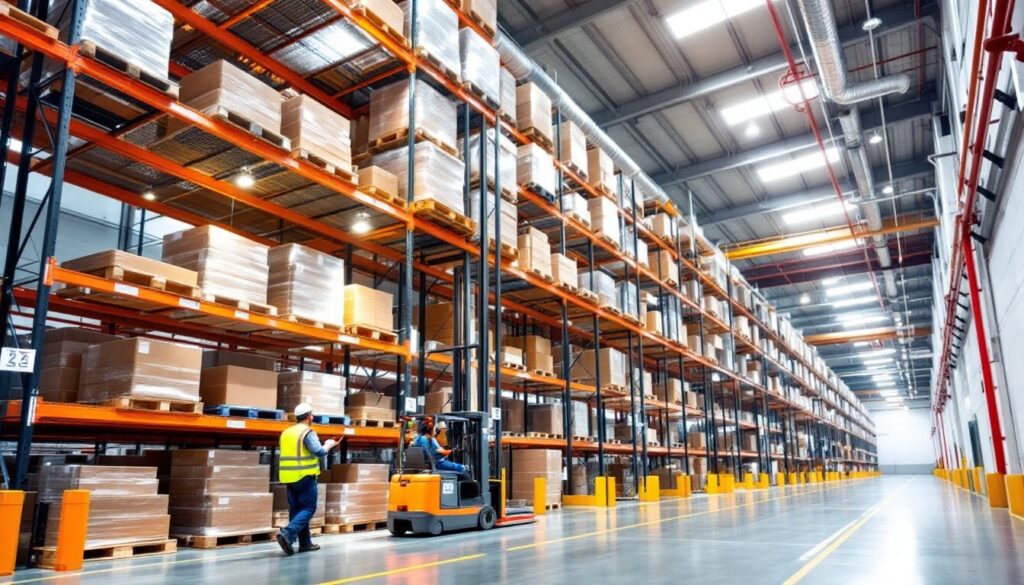
Typical warehouse ceilings range from 12 to 40 feet in commercial settings, but many operations use only the bottom 6 to 8 feet for storage. That’s wasted volume. By installing racking, mezzanines, or platform systems, facilities can double or even triple usable storage capacity within the same four walls.
Beyond cost savings, vertical systems improve workflow. Organized vertical zones reduce travel time for picking and restocking, and clear floor space allows forklifts and pallet jacks to maneuver more efficiently. For home-based businesses or hobbyists managing extensive inventory, think woodworking supplies, seasonal goods, or bulk materials, vertical storage keeps items accessible without cluttering workspace. Modern systems also integrate with inventory management software, making stocktaking faster and more accurate.
Types of Vertical Storage Systems to Consider
Pallet Racking Systems
Pallet racking is the workhorse of vertical storage. These steel frames hold palletized goods at multiple levels, accessible by forklift or pallet jack. The most common types include:
- Selective racking: Each pallet is directly accessible. Beams adjust in 2-inch increments to accommodate different load heights. Standard uprights range from 12 to 20 feet, though custom heights go higher. Load capacity per beam pair typically runs 2,500 to 4,000 pounds, depending on frame gauge and cross-bracing.
- Drive-in/drive-through racking: Forklifts enter lanes to load or retrieve pallets. Drive-in systems load and unload from one side (last-in, first-out): drive-through allows access from both ends (first-in, first-out). These maximize density but sacrifice individual pallet access.
- Push-back and gravity flow racking: Pallets slide on rails or rollers. Push-back systems let you nest multiple pallets deep on each level: gravity flow uses slight inclines for automatic rotation. Both suit high-turnover inventory.
When selecting pallet racking, measure clear ceiling height and subtract 18 to 24 inches for sprinkler clearance (per NFPA 13 and local fire codes). Anchoring to concrete slabs requires wedge anchors or expansion bolts rated for the combined load: many jurisdictions require engineered drawings and permits for racks over 12 feet or supporting more than 5,000 pounds per upright.
Safety note: Always wear hard hats, steel-toed boots, and high-visibility vests when working around forklifts and heavy racking. Inspect welds and beam connections quarterly for cracks or deformation.
For DIY or smaller-scale setups, consider industrial shelving strategies that adapt similar principles without requiring heavy machinery.
Mezzanine Floors and Platforms
Mezzanines are elevated platforms that create a second (or third) working level inside an existing structure. They’re ideal when you need both storage and workspace, think assembly areas, offices, or bulk shelving zones above ground-level operations.
Most mezzanines use steel or aluminum framing with decking options including plywood, bar grating, or corrugated steel panels. Load ratings vary widely: light-duty platforms support 50 to 75 pounds per square foot (psf), while heavy-duty industrial mezzanines handle 250 psf or more. Always consult the International Building Code (IBC) and local amendments: mezzanines over 400 square feet typically require permits, and any mezzanine must meet egress, guardrail, and fire-rating standards.
Installation involves anchoring columns to the slab with base plates and anchor bolts, then bolting or welding cross beams. Stairs, handrails, and kick plates (minimum 4 inches high) are code-required. For DIY enthusiasts with large basements or garages, scaled-down loft platforms using 2×10 or engineered lumber joists on posts can mirror the concept, provided you calculate live and dead loads correctly and secure ledger boards to wall studs.
Mezzanines also integrate well with pallet racking below, letting you stack light or slow-moving inventory on the upper deck while keeping fast-turn pallets at ground level. Builders looking for creative ways to reclaim wasted ceiling height in residential spaces often adapt basement storage strategies using similar vertical layering.
Tool tip: For cutting steel tube or angle iron during custom mezzanine builds, a cold-cut saw beats an abrasive chop saw, it leaves cleaner edges and reduces sparks. If you’re working with wood decking, a circular saw with a framing blade handles plywood and OSB efficiently, but a miter saw gives cleaner cuts on stair stringers and trim.
Key Benefits of Implementing Vertical Storage
Maximized floor space: Every square foot you free up at ground level translates to better traffic flow, safer forklift operations, or room for additional workstations. In residential shop settings, that means more open area for project assembly without tripping over material piles.
Scalability: Vertical systems grow with your needs. Add another tier of racking, extend a mezzanine, or install modular shelving units as inventory expands, without signing a new lease or building an addition.
Improved organization and retrieval: When items have designated vertical zones, workers spend less time hunting and more time picking. Label each level clearly, use bin locations, and consider color-coded zones by product category. For advanced tracking, RFID tags and barcode scanners integrate seamlessly with multi-level racks, as detailed in many step-by-step project guides.
Enhanced safety: Properly installed racking keeps heavy items off the floor, reducing trip hazards and protecting goods from water damage (important if your slab has drainage issues). Column guards and safety netting (rated for the load) catch falling items and shield workers below mezzanines.
Cost efficiency: While upfront installation involves material and labor costs, expect $50 to $150 per linear foot for basic selective racking and $60 to $100 per square foot for mezzanine structures (prices vary by region and steel market conditions), the ROI comes from avoided rent, faster picking, and reduced product loss. Many businesses recoup the investment within 18 to 24 months.
For residential workshop owners, even modest vertical upgrades, wall-mounted cabinet storage solutions or overhead lumber racks, deliver similar benefits at a fraction of the cost.
How to Choose the Right Vertical Storage Solution
Start by measuring your clear ceiling height and identifying any obstructions: HVAC ducts, electrical conduit, or sprinkler lines. Subtract required clearances (typically 18 inches below sprinklers) to determine usable vertical space.
Next, calculate your inventory profile:
- Pallet count and turnover rate: High-turnover SKUs suit selective or flow racks: slow-movers can go into drive-in systems.
- Weight and dimensions: Ensure beam and deck ratings exceed your heaviest unit load by at least 20 percent for safety margin.
- Access method: If you rely on hand trucks or walk-behind pallet jacks, keep lower tiers accessible. Forklift operations open up taller configurations.
Permitting and codes: Most jurisdictions require permits for structural modifications, seismic bracing (per ASCE 7), and fire suppression adjustments. Hire a structural engineer to stamp drawings for racks over 12 feet or any mezzanine carrying live loads. Non-permitted installations risk fines and insurance claim denials.
Installation:
- Prep the slab: Repair cracks, check levelness (within 1/4 inch over 10 feet), and mark anchor points with a chalk line and measuring tape.
- Anchor uprights: Drill holes with a rotary hammer and carbide bit (typically 5/8-inch or 3/4-inch for wedge anchors). Torque bolts to manufacturer specs, under-tightening causes wobble, over-tightening can crack concrete.
- Assemble frames: Use safety clips or locking pins on beam connections. Double-check plumb with a 4-foot level or laser level.
- Add bracing and decking: Wire mesh decking prevents pallets from falling through: wood or metal decking on mezzanines must be secured with screws or clips, not just laid loose.
For simpler projects, like wall-mounted shelving or small loft platforms, standard carpentry tools (drill/driver, circular saw, stud finder, level) suffice. Heavier systems demand impact wrenches, torque wrenches, and beam clamps. Renting equipment (like a scissor lift for high beam installation) often costs less than the safety risk of working off ladders.
Material sourcing: Buy from suppliers that provide load charts, installation manuals, and engineered drawings. Salvaged or used racking can save money, but inspect every weld and connection: bent or cracked components fail under load. Match upright and beam brands, mixing systems voids warranties and creates compatibility headaches.
Those managing large-scale home storage can draw on principles from small-space organization, adapting modular and vertical thinking to fit garage or shed layouts.
Conclusion
Vertical storage isn’t a one-size-fits-all fix, but it’s one of the smartest investments for anyone managing inventory in a space-constrained environment. By leveraging ceiling height with pallet racks, mezzanines, or platform systems, you unlock capacity, improve workflow, and control costs without moving to a bigger building. Measure twice, anchor once, and always follow code, your back, your budget, and your insurance carrier will thank you.