A vehicle represents one of the biggest investments most homeowners make, yet it often sits exposed to the elements or crammed into a cluttered garage surrounded by lawn equipment and old paint cans. Proper vehicle storage isn’t just about finding a spot to park, it’s about protecting value, maximizing usable space, and creating a functional area that serves multiple purposes. Whether dealing with a daily driver, seasonal recreational vehicle, or classic car project, smart storage strategies can transform a chaotic garage into an organized workspace while keeping vehicles protected from weather, pests, and accidental damage.
Table of Contents
ToggleKey Takeaways
- Proper vehicle storage solutions protect your investment from weather damage, UV exposure, and pests while maintaining resale value over time.
- Indoor organization systems like wall-mounted racks, overhead platforms, and slatwall panels maximize garage space while keeping vehicles and tools safely stored and accessible.
- Outdoor vehicle storage requires breathable car covers (never tarps), gravel or paver pads for drainage, and dedicated parking areas at least 12–14 feet wide for RVs and larger vehicles.
- DIY projects such as lofted storage platforms, rolling tool carts, and wall-mounted workbenches can effectively double usable garage space without expensive renovations.
- Essential vehicle storage accessories including drip pans, tire racks, battery maintainers, and motion-sensor lighting provide comprehensive protection and security for long-term vehicle storage.
- Carports offer a cost-effective alternative ($1,000–$3,000 for metal structures) when garage space isn’t available, though local permits and zoning regulations must be verified first.
Why Proper Vehicle Storage Matters for Homeowners
Leaving a vehicle exposed to rain, snow, UV rays, and temperature swings accelerates deterioration. Paint fades, seals crack, and moisture creeps into vulnerable spots. A car parked under tree cover might avoid direct sun but collects sap, bird droppings, and leaf debris that trap moisture against metal surfaces.
Inside an unorganized garage, the risks shift. Bicycles lean against doors, creating ding hazards. Shelving units overflow, and tools migrate onto hoods. Without designated storage zones, the garage becomes a dumping ground rather than a protective space.
Proper storage also impacts resale value. Vehicles stored in climate-controlled or covered conditions maintain cleaner interiors, intact trim pieces, and fewer rust issues. For classic cars or seasonal toys like motorcycles and ATVs, controlled storage prevents costly repairs down the line.
Beyond protection, organized vehicle storage reclaims square footage. A two-car garage that actually fits two cars, plus workbenches, sporting gear, and smart organization systems, delivers more utility than one crammed with random boxes.
Indoor Vehicle Storage Options
Garage Organization Systems
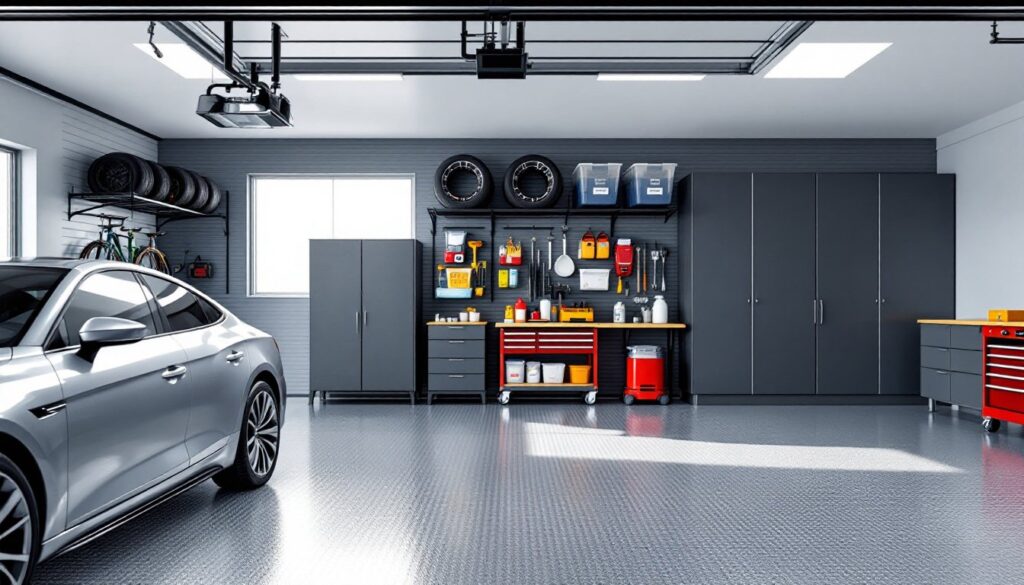
Wall-mounted racks, overhead platforms, and slatwall panels free up floor space so vehicles fit without playing automotive Tetris. Slatwall systems use horizontal grooves that accept hooks, bins, and shelves, reconfigurable as needs change. Install them on studs using 3-inch exterior screws rated for the load.
Overhead storage racks handle seasonal items: winter tires, camping gear, or kayaks. Most residential units support 250–600 pounds when mounted to ceiling joists. Measure clearance carefully, racks typically drop 16–24 inches from the ceiling, and vehicles need adequate door-swing room underneath.
For tools and small parts, pegboard or French cleat systems keep frequently used items within arm’s reach. French cleats use interlocking 45-degree beveled strips: one mounted to the wall studs, the other to tool holders or bins. This setup beats pegboard for heavy items like power drills or air compressors.
Consider a modular cabinet system for flammables, chemicals, and paint. Metal cabinets with locking doors meet fire code requirements in many jurisdictions and prevent spills from damaging vehicle finishes. Wall-hung cabinets leave floor space open for sweeping and mobility.
DIY enthusiasts can build custom workbench and storage combinations using 2×4 framing and 3/4-inch plywood tops. Incorporate casters on one side for flexibility, and add pegboard backing for vertical tool storage.
Carports and Covered Structures
When garage space isn’t available or additional vehicles need shelter, a carport offers weather protection without the cost of a full structure. Metal carports start around $1,000–$3,000 for single-car kits, depending on size and gauge thickness. Galvanized steel or aluminum frames resist rust: look for 12- or 14-gauge tubing for durability.
Most carports require a concrete pad or gravel base for drainage and stability. A 10×20-foot pad (standard single-car size) needs 4 inches of compacted gravel base plus 4 inches of concrete with 6×6 W1.4xW1.4 welded wire mesh for reinforcement.
Check local zoning. Many areas require permits for structures over 120 square feet or anything anchored to a permanent foundation. Setback rules often mandate 5–10 feet from property lines.
Fabric carports (heavy-duty polyethylene over a steel frame) cost less, $300–$800, but last 3–7 years versus decades for metal. They work for seasonal storage or temporary coverage during a garage renovation but won’t stand up to heavy snow loads or high winds without reinforcement.
Outdoor Vehicle Storage Strategies
When indoor space isn’t an option, outdoor storage demands more active protection. Start with a breathable car cover, never use tarps directly on paint. Tarps trap condensation and can scratch finishes as they shift in wind. Quality covers use multi-layer fabrics with moisture-wicking liners and UV-resistant outer shells.
For long-term outdoor parking, a gravel or paver pad beats dirt or grass. Grass traps moisture against tires and undercarriage, accelerating rust on brake components and exhaust systems. A 4-inch crushed stone base topped with landscape fabric and pavers promotes drainage.
RV and boat storage requires different considerations. These larger vehicles often exceed residential driveway width limits (typically 10–12 feet). A dedicated parking pad should be 12–14 feet wide for an RV to allow door clearance and utility hookups.
Some HOAs restrict visible RV or boat storage. Portable RV shelters (12×30 feet or larger) provide coverage but check deed restrictions before purchase. These shelters need anchoring, auger-style anchors work in soil: concrete anchors are required for hard surfaces.
For seasonal vehicles like motorcycles or ATVs, a weather-resistant storage shed (8×10 feet minimum) keeps them secure and dry. Resin or vinyl sheds resist rot and need less maintenance than wood but can crack in extreme cold. Metal sheds are durable but require ventilation to prevent condensation.
Homeowners using durable outdoor storage setups often install battery tenders and fuel stabilizers for vehicles stored longer than 30 days. Ethanol-blended fuel degrades quickly, gumming carburetors and fuel injectors.
DIY Vehicle Storage Projects to Maximize Space
A lofted storage platform above a parked car doubles usable garage space. Build it from 2×6 or 2×8 joists spanning wall studs, with 3/4-inch tongue-and-groove plywood decking. Design for 50 pounds per square foot live load minimum, more if storing heavy items.
Mount joists to wall studs using joist hangers rated for the lumber size. On the opposite end, bolt a ledger board (same dimension as joists) to studs with 1/2-inch lag bolts every 16 inches. Space joists 16 inches on center for adequate support.
Install a pull-down ladder or fixed stairs for access. Fold-down attic ladders work if ceiling height allows (7–8 feet minimum from garage floor to platform underside for vehicle clearance).
Rolling tool carts keep supplies mobile. Build a simple cart using 2×4 base frames, 1/2-inch plywood shelves, and 3-inch swivel casters (at least two locking). Add a handle from 3/4-inch conduit or 1-inch dowel.
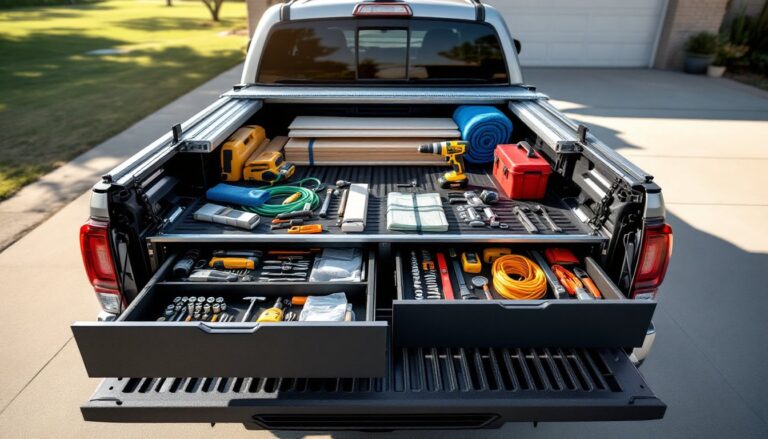
For pickup truck owners, a custom bed organizer transforms wasted space into gear storage. DIY versions use 1/2-inch plywood dividers and aluminum angle for adjustable compartments. Secure dividers with stainless steel bolts to resist corrosion.
A bike hoist system lifts bicycles to the ceiling using pulleys and rope or cable. Kits cost $20–$40, or build one using 1/4-inch nylon rope, double pulleys, and ceiling hooks screwed into joists. Lift capacity varies: most handle 50 pounds per bike.
Wall-mounted fold-down workbenches save floor space. Hinge a 2×4 frame supporting a 3/4-inch plywood top to wall studs. Add a drop-leg or chain support when in use. Detailed plans are available on maker tutorial sites.
Essential Accessories for Vehicle Protection
Floor mats and oil-dry absorbent catch leaks before they stain concrete. Rubber garage mats come in interlocking tiles or roll-out sheets. Look for 1/4- to 1/2-inch thickness for durability and diamond-plate or coin patterns for traction.
Drip pans placed under engines catch oil, coolant, or transmission fluid. Aluminum pans resist rust: plastic versions cost less but crack over time. Size matters, 24×36 inches handles most passenger vehicles.
For climate control, a portable dehumidifier prevents moisture buildup in enclosed garages. Models rated for 1,500–3,000 square feet work for typical two-car garages. Empty the reservoir regularly, or route the drain hose to a floor drain or sump.
Tire storage racks keep seasonal tire sets organized and off the floor. Wall-mounted racks hold 4–8 tires and require mounting to studs. Freestanding racks need stable footing, place them on concrete, not dirt or gravel.
Battery maintainers (trickle chargers) keep vehicles ready during storage. Unlike standard chargers, maintainers monitor voltage and cycle on/off to prevent overcharging. Connect them to a GFCI-protected outlet, garage circuits should have GFCI protection per NEC Article 210.8.
Wheel chocks and jack stands are must-haves if performing maintenance. Never rely on a jack alone. Jack stands rated for the vehicle weight (usually 2–3 tons per stand for passenger cars) provide stable support. Place them on solid, level surfaces, never on dirt or gravel.
For added security, motion-sensor lighting and wireless cameras deter theft. Solar-powered lights work for detached structures without electrical access. Cameras should cover entry points and vehicle positions: 1080p resolution minimum ensures usable footage.
Homeowners expanding their garage organization approach often add magnetic tool strips for quick-grab access to wrenches and screwdrivers, plus clear storage bins for visibility. Label everything, future-you will appreciate it during the next seasonal swap.