Square footage is expensive, but clutter is free. In most apartments, the problem isn’t that there’s too much stuff, it’s that storage isn’t working hard enough. A standard one-bedroom apartment offers around 600-800 square feet of floor space, but there’s often twice that in unused vertical and hidden real estate. The difference between a cramped apartment and a functional one usually comes down to intentional storage choices. This guide walks through twelve proven storage strategies that turn awkward corners, blank walls, and overlooked furniture into legitimate storage capacity without major renovations or lease violations.
Table of Contents
ToggleKey Takeaways
- Apartment storage solutions prioritize vertical and hidden real estate over floor space, with most units offering twice as much usable wall and under-furniture capacity as renters typically utilize.
- Multi-functional furniture like storage beds with drawers, ottomans with hinged tops, and media consoles with enclosed cabinets are essential investments that maximize small apartment living without lease violations.
- Smart kitchen organization uses shelf risers, pull-out drawers, magnetic strips, and labeled airtight containers to double cabinet capacity and keep countertops clear of non-daily-use appliances.
- Closet capacity can triple through double-hang rod systems, slim hangers, hanging organizers, and vacuum-sealed seasonal storage that protects deposits while maintaining accessible clothing.
- Bathroom storage relies on over-the-toilet units, tension-rod shower caddies, floating shelves, and door-mounted organizers to reclaim vertical space in compact 5×8-foot rooms.
- The key to effective apartment storage is intentionality—every solution should have a specific purpose and defined category of items, turning unused space into legitimate storage capacity without permanent renovations.
Why Smart Storage Matters in Small Apartments
Most apartments come with minimal built-in storage, a single closet per bedroom, a few kitchen cabinets, and maybe a linen closet if you’re lucky. Landlords build to code minimums, not to your actual storage needs. The result is a constant battle against visual clutter and wasted space.
Smart storage does three things. First, it reclaims unused space, the 12 inches between the top of your door and the ceiling, the gap under the bed, the dead corner in the kitchen. Second, it keeps frequently used items accessible without leaving them on counters or floors. Third, it protects your security deposit by avoiding permanent alterations like drilling into studs for heavy shelving (unless your lease allows it).
The key difference between effective storage and junk accumulation is intentionality. Every storage solution should have a specific purpose and a defined category of items. A catch-all bin under the sink isn’t organization, it’s procrastination with a lid.
Vertical Storage: Making the Most of Your Wall Space
Walls are the most underutilized storage surface in any apartment. Most renters stop at eye level, leaving 3-4 feet of usable wall space untouched.
Floor-to-ceiling shelving units are the workhorse solution. Look for units that are at least 72 inches tall and can be anchored to the wall with tension rods or furniture straps if your lease prohibits drilling. IKEA’s BILLY bookcases (15.75 inches deep) work in living rooms: narrower units (10-12 inches deep) fit hallways and kitchens without creating bottlenecks.
Wall-mounted track systems (like Elfa or Rubbermaid’s FastTrack) give flexibility without multiple anchor points. Install the horizontal track into at least two studs (typically 16 inches on center in most apartments), then hang baskets, shelves, and hooks as needed. These are particularly useful in kitchens for pot racks and utensil storage.
Floating shelves work in tight spots where depth is limited. Install them above doorways, around windows, or in that awkward space above the toilet. Use 8-inch-deep shelves for books and décor, 12-inch for kitchen storage.
Safety note: Always locate studs with a stud finder before mounting anything over 20 pounds. Toggle bolts work in drywall but have weight limits, check the package rating. If your lease prohibits wall penetration, damage-free hanging strips (Command strips, 3M) hold up to 16 pounds per set when applied correctly to clean, dry surfaces.
Don’t overlook the space above doors and in corners. Corner shelving units and over-the-door organizers (mesh pockets, hooks, or narrow shelving) add storage without consuming floor space. Many creative multi-purpose solutions have gained popularity for exactly this reason.
Multi-Functional Furniture for Hidden Storage
Furniture that only does one job is a luxury in small apartments. Every piece should earn its floor space.
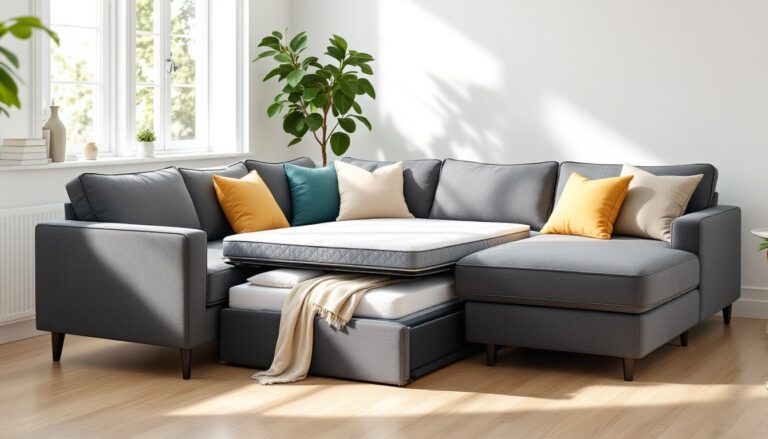
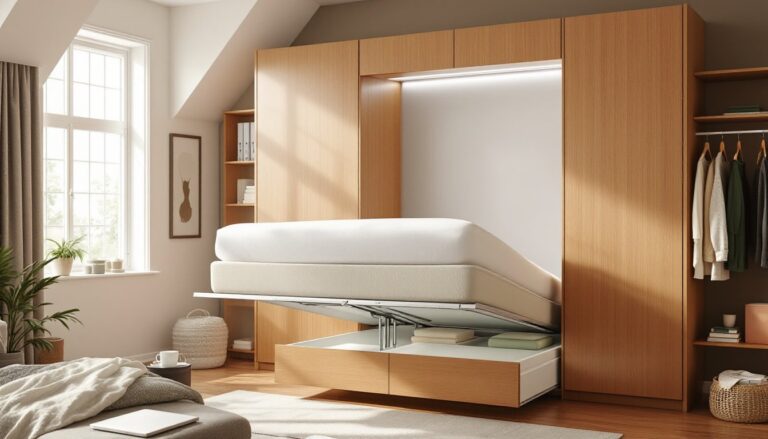
Storage beds are non-negotiable if you’re short on closet space. Platform beds with built-in drawers (typically four to six drawers per queen frame) handle off-season clothing, bedding, or shoes. Hydraulic lift beds expose the entire under-bed area, roughly 20-30 cubic feet of storage in a queen frame. Make sure the lift mechanism is rated for the weight you’ll store.
Ottomans and benches with hinged tops store blankets, games, or entryway clutter. Look for units with solid wood frames rather than particleboard if you’ll sit on them daily. A 48-inch bench at the foot of the bed or in an entryway can replace a coffee table while hiding bulky items.
Expandable dining tables with drop leaves or built-in storage save space in dual-purpose rooms. Some designs include shallow drawers for placemats and utensils. Pair with stackable or folding chairs that hang on wall hooks when not in use.
Media consoles should have enclosed cabinets, not just open shelving. A 60-inch console typically offers 15-20 cubic feet of enclosed storage for electronics, DVDs, or board games while supporting a TV.
When shopping, check the interior dimensions, not just the exterior footprint. A dresser with 12-inch-deep drawers holds more than one with 8-inch drawers, even if they look the same size from the outside. Explore options for stylish and functional designs to match your apartment’s aesthetic.
Kitchen and Pantry Organization Hacks
Apartment kitchens are notoriously stingy with cabinet and counter space. Efficiency comes from layering storage within existing cabinets and claiming underutilized zones.
Inside cabinets:
• Shelf risers (metal or acrylic, 6-8 inches tall) double the usable space by stacking plates or canned goods
• Pull-out drawers or baskets installed under the sink organize cleaning supplies and prevent the black hole effect
• Door-mounted racks hold spices, lids, or cutting boards without taking up shelf depth
• Stackable bins (clear plastic, labeled) corral snacks, baking supplies, or pasta by category
For renters dealing with awkward corner cabinets, lazy Susans or tiered corner shelves make deep cabinets accessible without arm-length excavation.
Pantry solutions:
If there’s no dedicated pantry, create one. A freestanding wire shelving unit (18 inches deep, 36-48 inches wide, 72 inches tall) fits in most kitchens or even a hallway closet. Store dry goods in airtight containers (OXO, Rubbermaid Brilliance) to maximize space and keep pests out, a 5-quart container holds a standard 5-pound bag of flour more compactly than the original packaging.
Vertical space:
• Magnetic knife strips (18-24 inches) free up counter and drawer space
• Pegboard or rail systems on blank walls hold frequently used utensils, pots, and pans
• Ceiling-mounted pot racks work in kitchens with 8-foot or higher ceilings: confirm your ceiling can support 30-50 pounds before installation
Countertop discipline:
If it doesn’t get used daily, it doesn’t live on the counter. Small appliances (toaster, blender, coffee maker) can go in lower cabinets or a nearby closet with a labeled bin. Use a rolling cart (3-tier, 12-18 inches wide) as mobile storage for baking supplies or beverage items, it tucks next to the fridge when not in use.
Measure your cabinet interiors before buying organizers. A shelf riser that’s 1 inch too wide is useless.
Closet and Bedroom Storage Strategies
Bedroom closets in apartments are often 24-30 inches deep and just wide enough for a single hanging rod. You can triple that capacity with the right approach.
Maximize hanging space:
• Install a double-hang rod system, one rod at 80 inches, a second at 40 inches, to layer shirts, pants, and skirts
• Use slim velvet or flocked hangers (⅛-inch thick) instead of plastic or wood (½-inch thick) to fit 50% more garments per linear foot
• Add a tension rod across the closet’s width to hang scarves, belts, or bags
Shelving and drawers:
• Hanging organizers (fabric or canvas with 4-10 shelves) store sweaters, shoes, or accessories without installation
• Stackable shoe racks or clear shoe boxes (labeled) fit under hanging clothes or on closet floors
• Drawer units on wheels (like IKEA’s ALEX or Sterilite’s 3-drawer carts) slide under clothing and pull out for access
Under-bed storage:
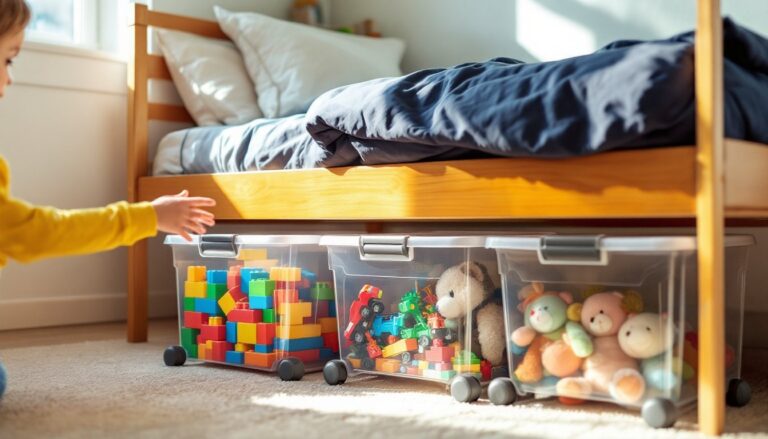
• Rolling bins (low-profile, 6 inches tall or less) fit under beds with minimal clearance
• Vacuum-sealed bags compress bulky items like winter coats or comforters to ⅓ their original volume, but don’t over-compress natural fibers like down, which can lose loft
For those managing tight spaces, combining several small-space strategies often yields the best results.
Other bedroom storage:
• Nightstands with drawers or shelves beat open-leg tables for function
• Wall-mounted hooks or pegboard behind the door organize jewelry, hats, or tomorrow’s outfit
• Over-door mirrors with built-in hooks or shallow shelves add function without wall damage
Clothing rotation:
Store off-season clothing in bins or vacuum bags and swap them out twice a year. A queen bed frame with storage can hold an entire seasonal wardrobe underneath.
Bathroom Storage Solutions for Compact Spaces
Apartment bathrooms often max out at 5×8 feet, with a pedestal sink, zero counter space, and maybe one shallow cabinet. Storage here is about reclaiming vertical space and using the backs of doors.
Vertical and wall-mounted options:
• Over-the-toilet shelving units (freestanding or wall-mounted, 24-30 inches wide, 60-72 inches tall) add three or more shelves without a footprint
• Tall, narrow cabinets (10-12 inches deep) fit beside the toilet or sink and hold towels, toiletries, and cleaning supplies
• Floating shelves above the toilet or next to the mirror store daily essentials within arm’s reach
• Tiered trays or lazy Susans inside cabinets organize hair tools, skincare, and makeup so items don’t disappear in the back
Door and shower storage:
• Over-the-door organizers (mesh pockets or towel bars) hold hair dryers, brushes, or cleaning supplies
• Tension-rod shower caddies (pole-mounted from tub to ceiling) hold shampoo, soap, and razors without drilling: look for rust-resistant stainless steel or aluminum
• Suction or adhesive corner shelves keep shower products off the tub edge
Under-sink storage:
Pedestal sinks offer no built-in storage, but a sink skirt (fabric attached with Velcro) hides bins or baskets underneath. For vanity sinks, use stackable drawers or pull-out organizers to work around plumbing.
Towel and linen management:
• Wall-mounted towel racks or hooks (3-5 hooks on a 24-inch rail) keep towels off the floor
• Rolling carts (narrow, 3-4 tiers) store extra toilet paper, towels, and cleaning supplies in the corner or next to the tub
Organization enthusiasts often turn to publications like Real Simple for practical decluttering and storage ideas. For budget-conscious renters, creative DIY furniture hacks can stretch dollars while adding personalized storage.
Safety reminder: Use non-slip shelf liners in cabinets under sinks to catch leaks and keep bottles stable. Avoid storing medications in the bathroom, heat and humidity degrade them.
Conclusion
Apartment storage isn’t about buying more bins, it’s about making intentional decisions for every square inch. Prioritize vertical space, choose furniture that multitasks, and organize by category with clear access. Most of these solutions are reversible and renter-friendly, protecting your deposit while giving you a functional space. Start with the room that frustrates you most, measure twice, and build storage that works as hard as you do.